After the Louvre.


What the thefts from European museums are revealing about the value of heritage
In October 2025, something that had seemed almost unthinkable became real: the theft of the French Crown Jewels from the Galerie d’Apollon at the Louvre. One of the best-known and most heavily guarded institutions in the world had proved vulnerable.
The thieves broke into several high-security display cases and took pieces of incalculable value, including earrings, necklaces and tiaras associated with Marie-Amélie, Marie-Louise and Empress Eugénie.
The Louvre was not an isolated case.
Throughout 2026, a succession of thefts from European museums has created an unsettling picture. Some appear to follow an obvious logic: gold, diamonds, coins and jewellery that can be melted down or dismantled, offering immediate financial value.
But reducing theft to the value of the material alone leaves out an essential part of the story. A work may also be valued for what it represents — for precisely what cannot be melted down or sold as raw material. Its maker. Its history. The person who once owned it. All these things can turn an object into something deeply desirable, capable of inspiring admiration in more than one person. There is also the possibility of possessing, in complete privacy, something unique in the world. The satisfaction of being the only person able to contemplate it is something money alone cannot entirely explain.
Because the value of a work extends far beyond its price.
The value of possessing the exclusive, the irreplaceable
There is a familiar image of art theft: a stolen masterpiece disappearing into a private room, destined for the eyes of a secret collector.
Criminal reality, however, can be rather less romantic.
Stolen works may be used as bargaining chips between criminal networks or held as leverage for some future negotiation. In many thefts, there is no evidence at all that a collector is waiting somewhere in the background. Yet some objects attract us not because of what can be extracted from them, but because of what they are.
A photograph can show a Renoir. A copy can reproduce its colours. But neither of them is a Renoir.
The original still carries the trace of the person who created it: the attention, the labour, the choices, the inspiration. None of that is transmitted in quite the same way by anything other than the authentic object.
There is only one. And that singularity creates desire.
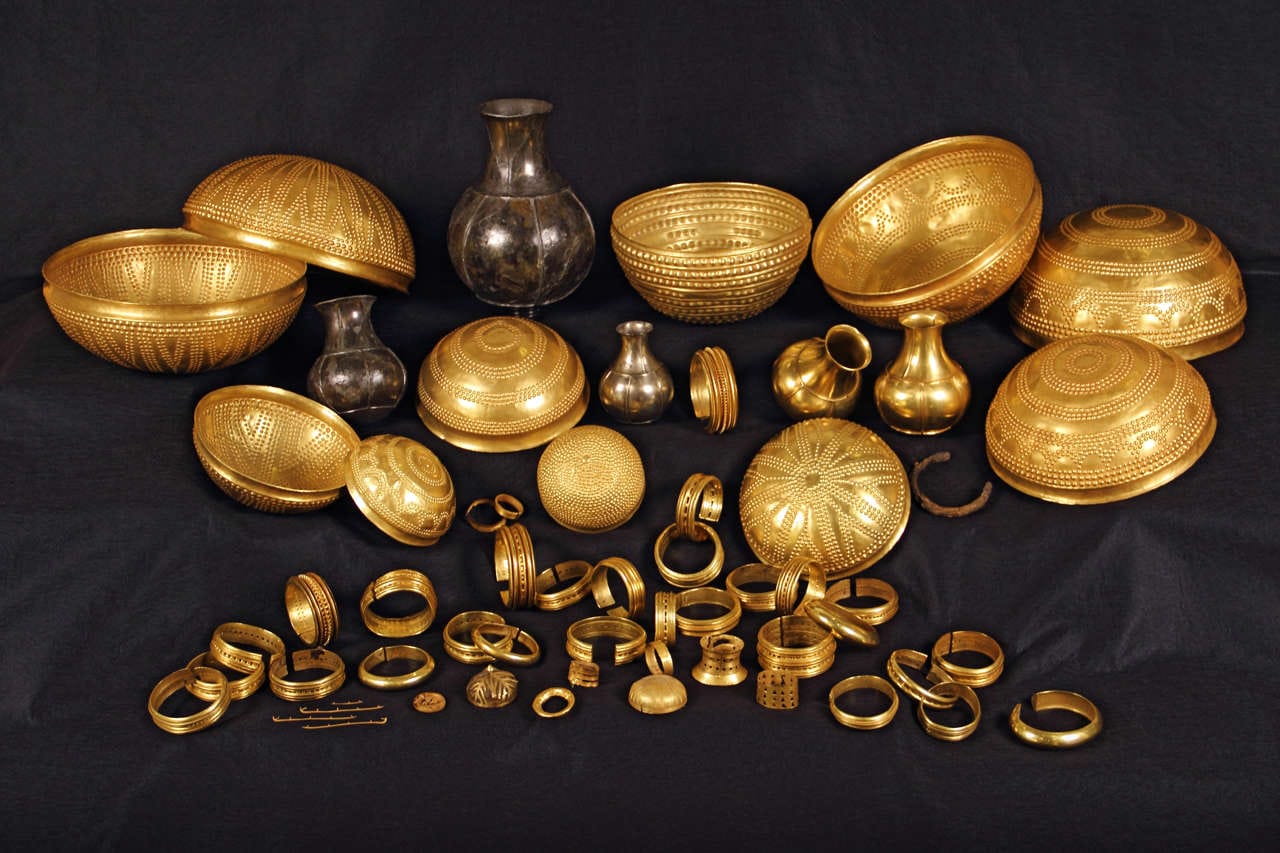

Villena Treasure — Villena Museum (Spain) and Torc from the Vix Treasure — Châtillon-sur-Seine (France)
When gold ceases to be history
During 2026, coins, jewellery and archaeological objects disappeared from European museums, even though their cultural importance far exceeded the value of the material from which they were made.
Here, something disturbing happens.
For a museum, an object preserves a date, a technique, an archaeological context, a memory. For someone interested only in turning it into money, it may become nothing more than a quantity of gold.
The gravest threat, then, is not necessarily that the object ends up in a clandestine collection. It is that the object ceases to exist as an object at all. At that point, history disappears with it.
The theft of the gold torc of the Princess of Vix in France in July 2026 pushed that concern further still. This was not simply an ancient piece of jewellery, but an object around 2,500 years old, carrying evidence of the techniques used to make it and offering insight into a society that has long since vanished.
Heritage turned into commodity
Museums perform an extraordinary act. They place in a public space things that were once private: a jewel, a painting, an object. Something that may once have belonged to a king, an aristocratic family or a collector becomes accessible to everyone.
We can see it. Admire it. Study it. We can come close to something that, in another age, would have been reserved for a very small number of people.
Theft reverses that process. The public becomes private again. The museum democratises; private possession withdraws.
At that point, the object may cease to have an ordinary economic value. It acquires another kind of value instead: the privilege of being the only person who can look at it whenever they choose.
We cannot know how many stolen objects eventually reach people driven by precisely that desire. But even the possibility raises an uncomfortable question:
Can exclusivity itself become part of an artwork’s value precisely because everyone else has been denied access to it?
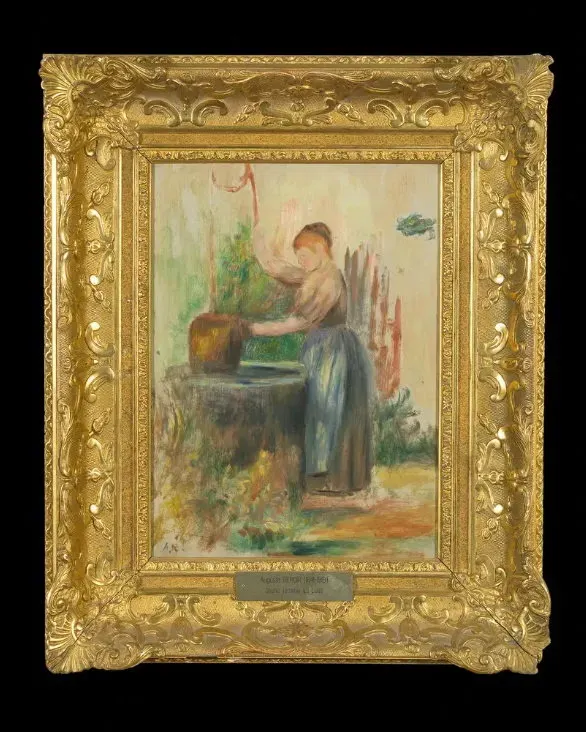
A Renoir is still a Renoir
In March this year, three paintings by Cézanne, Renoir and Matisse were stolen from the Fondazione Magnani Rocca near Parma. They were recovered months later.
An extremely famous painting may be worth millions, but its fame also makes it extraordinarily difficult to sell. Once stolen, its image circulates among police forces, museums, insurers, dealers and auction houses.
It cannot be transformed in the way a piece of gold can. Its history clings to it.
And in a strange way, that history makes it even more valuable. We care because we know who made it, because it occupies a place in cultural history, because it carries a meaning that goes far beyond its market price.

Enter, break, leave
The thefts of 2026 also reveal a much less romantic transformation.
Europol has warned of increasingly direct and violent methods: heavy tools, smashed display cases and operations designed to last only a matter of minutes.
In some cases, thieves appear to assume from the beginning that the alarm will sound. The objective is no longer to avoid detection. It is to leave before the response can reach them. The alarm, then, is no longer the end of the robbery. It becomes a stopwatch.
This places museums in a difficult position. Cameras, sensors and alarms can tell staff that something is happening, but they cannot necessarily stop it. Security becomes physical, architectural and human.
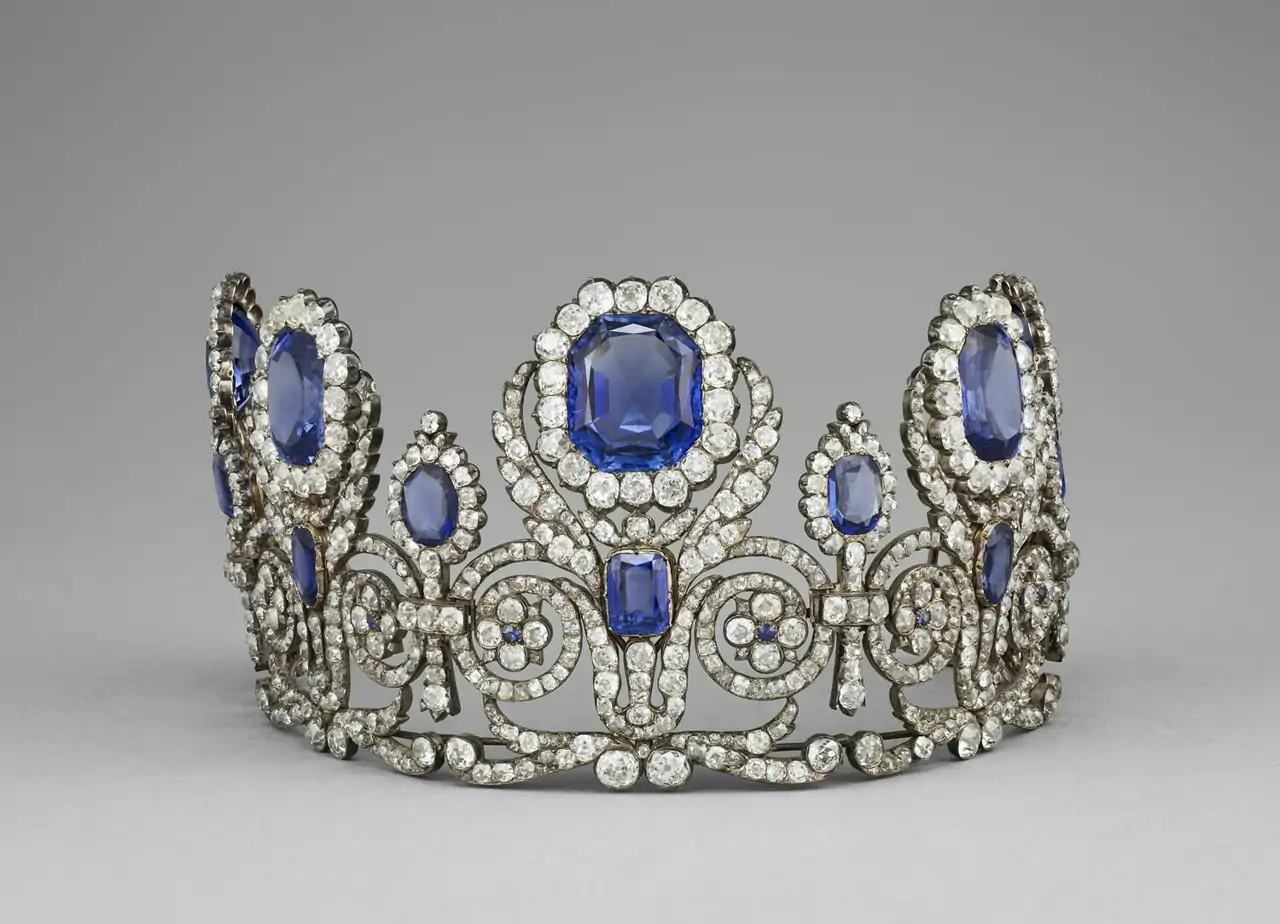
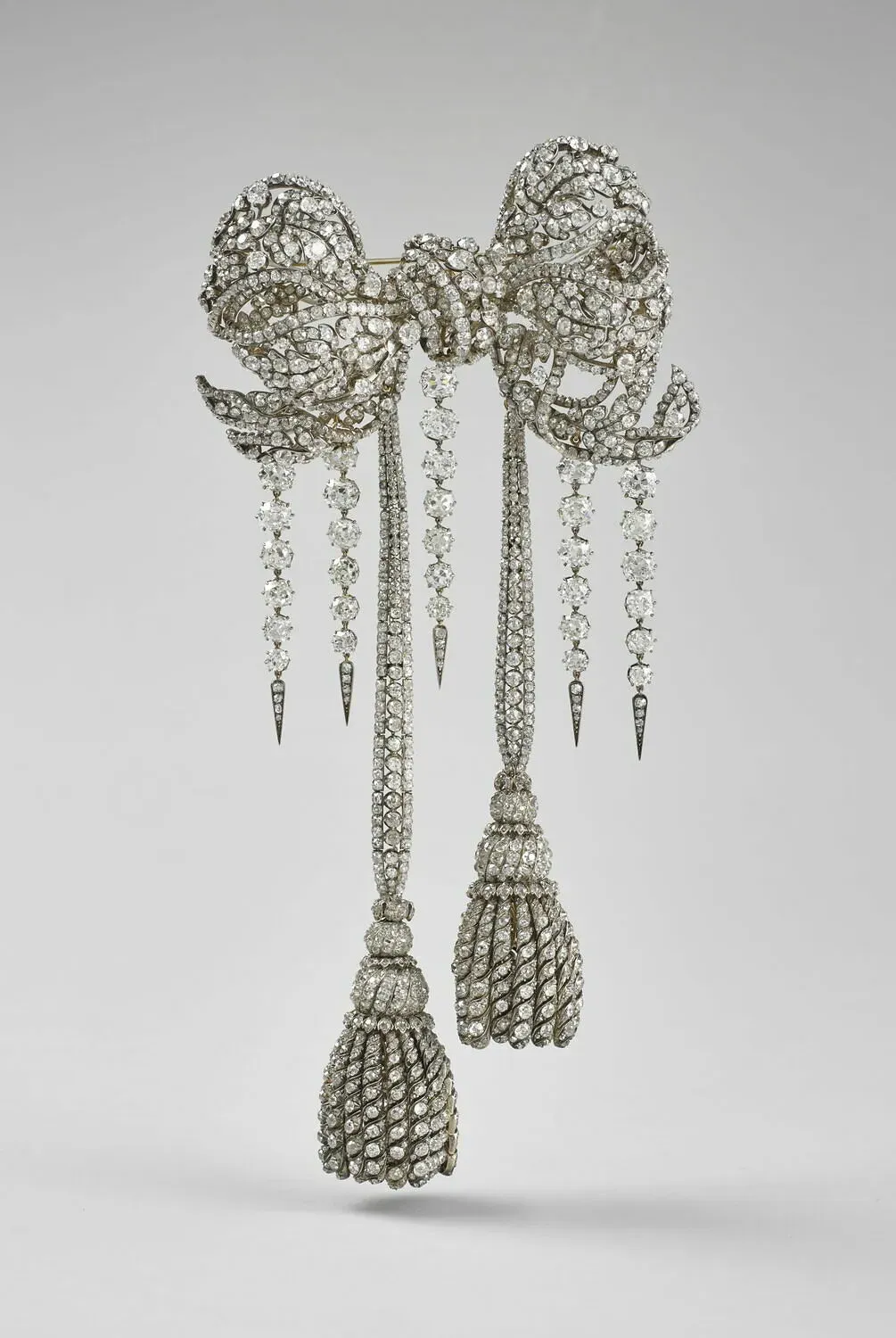
Tiara of Queen Marie-Amélie and Queen Hortense — Brooch of Empress Eugénie — Louvre Museum
Knowing the place
Some cases remind us that protecting a collection does not simply mean protecting objects. It also means protecting routines.
Access points. Visitor flows. Opening hours. Moments when staff attention is pulled elsewhere. A museum is not only a building. It is also a place of habits — and habits can be studied.
That is why so many thefts do not appear improvised. The target is identified in advance. The route is measured. The time required is calculated.
How far should a museum go to protect itself?
After the Louvre, and after the thefts that followed, the obvious response seems to be more surveillance, more sensors, more barriers. But how far should that go?
A museum’s mission is not simply to ensure that an object remains inside the building. It is also to allow us to approach it. To understand its scale. To notice the irregularities of a handmade surface. To see the marks left by a tool. To understand how a material was transformed into a work of art.
Our relationship with the object changes when distance becomes too great. The use of highly accurate replicas may offer a pragmatic solution for especially valuable objects, but it raises another question:
If a replica can look almost identical, why do we still want to see the original?
The part a replica cannot copy
A reproduction can imitate a form, recreate colour and dimensions, even reproduce imperfections on a surface.
But there is one thing it cannot reproduce: material history. The original is the object that was actually there. That is why cultural value does not lie only in beauty. It also lies in continuity.
Objects outlive people. They move across generations, accumulating layers of meaning without entirely losing those that came before. And it is precisely that continuity that the museum preserves.
The real value of what disappears
The thefts of recent months speak about security, crime and markets. But they also speak about desire. The desire to possess the exceptional. To turn an object into money. To control who is allowed to see it. And, paradoxically, our own desire to stand close to something we believe matters. That is why a work of art or a historic object can hold several kinds of value at once: material value, market value, rarity, authorship, history, the knowledge it gives us — and something harder to measure still: the meaning a society chooses to place upon it.
The very qualities that make us preserve these objects are also the qualities that make them desirable.
A museum turns admiration into access. When a work disappears into a clandestine collection, or is dismantled for the value of its materials, the loss is not simply that an object has been removed from a display case. What disappears is the possibility of encounter.
Perhaps that is the real challenge now facing Europe’s museums:
to protect extraordinary objects without losing the very reason they were preserved in the first place: the possibility that we may continue to encounter them.
Written by
Subscribe to our newsletter
Subscribe to our newsletter to get the latest updates and news