Made to Outlive Us

The craft of bookbinding, restoration and the objects we choose to preserve.
We live in a time when information seems to flow everywhere, instantly and in almost every imaginable format. Yet amid screens, digital content and archives we rarely touch anymore, the traditional book retains something that information alone cannot offer us: a physical presence.
At Atelia Circle, we are interested in books not only for what they contain, but also for everything that exists around them. Writers, illustrators, editors, printers, bookbinders, booksellers and collectors are all part of an ecosystem that has evolved over centuries around the making and circulation of books.
And some books become much more than vessels for words. An incunable, an illuminated manuscript patiently created before the arrival of the printing press, a beautifully bound volume, a rare first edition or a book produced in a very limited print run can become an exceptional object in its own right.
The quality of the paper, the richness of the illustrations, its provenance, its binding, its rarity or simply the history accumulated within its pages can give a book considerable cultural and artistic significance and, in some cases, make it a highly desirable collector's piece. Perhaps that is why holding an old book in our hands feels so different from simply reading one.
Its value may lie in its age or rarity. It may come from the person who once owned it, from a dedication hidden among its opening pages or simply from the memories we ourselves associate with it.
In other cases, the book comes close to being a work of art: an object in which literature, illustration, typography, paper and craftsmanship come together. And behind many of these objects lies a craft with centuries of history.
The Art of Bookbinding
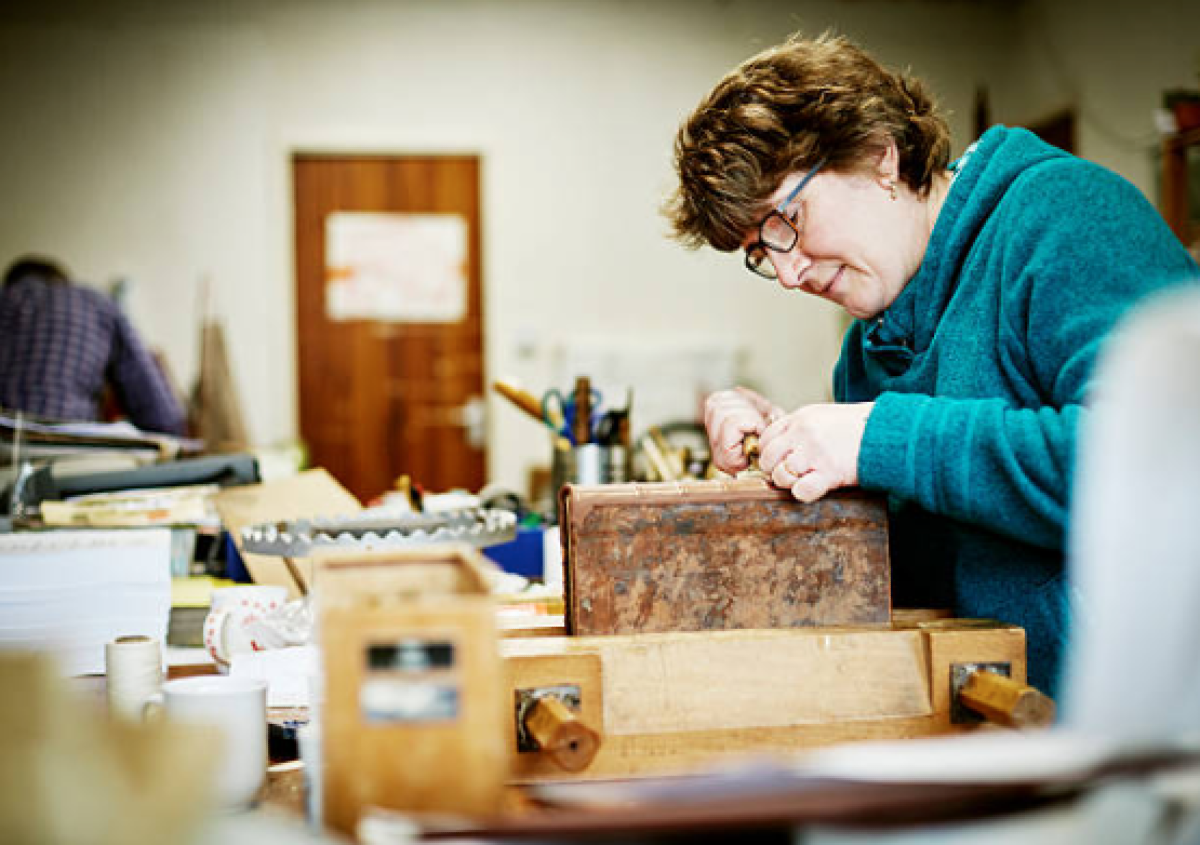
The traditional bookbinder transforms printed or handwritten sheets into objects designed to last.
The materials may appear simple: paper, board, linen thread, cloth, leather, parchment, silk and, occasionally, gold. Working with them, however, requires extraordinary precision.
Much of the process is still carried out by hand, using techniques and tools that would probably have been familiar to a craftsman several centuries ago.
Traditionally, it all begins by folding sheets of paper to form sections, or signatures. These are carefully arranged and then sewn together, usually with linen thread over tapes, cords or raised bands. This sewing creates the skeleton of the book. It determines not only how the pages are held together, but also how the book will open, how it will move and how it will withstand decades—or even centuries—of use.
The spine is then worked: pressed and glued and, in traditional bindings, sometimes rounded and backed to create the shoulders that allow the boards to sit correctly against the text block. Headbands may then be added at the top and bottom of the spine. Traditionally sewn by hand using silk or cotton thread, they bring together two elements that appear constantly in the bookbinder's work: structure and decoration.
Giving a Book Its Character
The boards that protect the text block are generally made from specialist bookbinding board and then covered with cloth, decorative paper, leather or parchment. This is perhaps where the craft begins to reveal its most creative side.
The choice of material, texture, colour and proportion gives each book a different personality and, in the most elaborate bindings, the cover itself becomes almost a canvas.
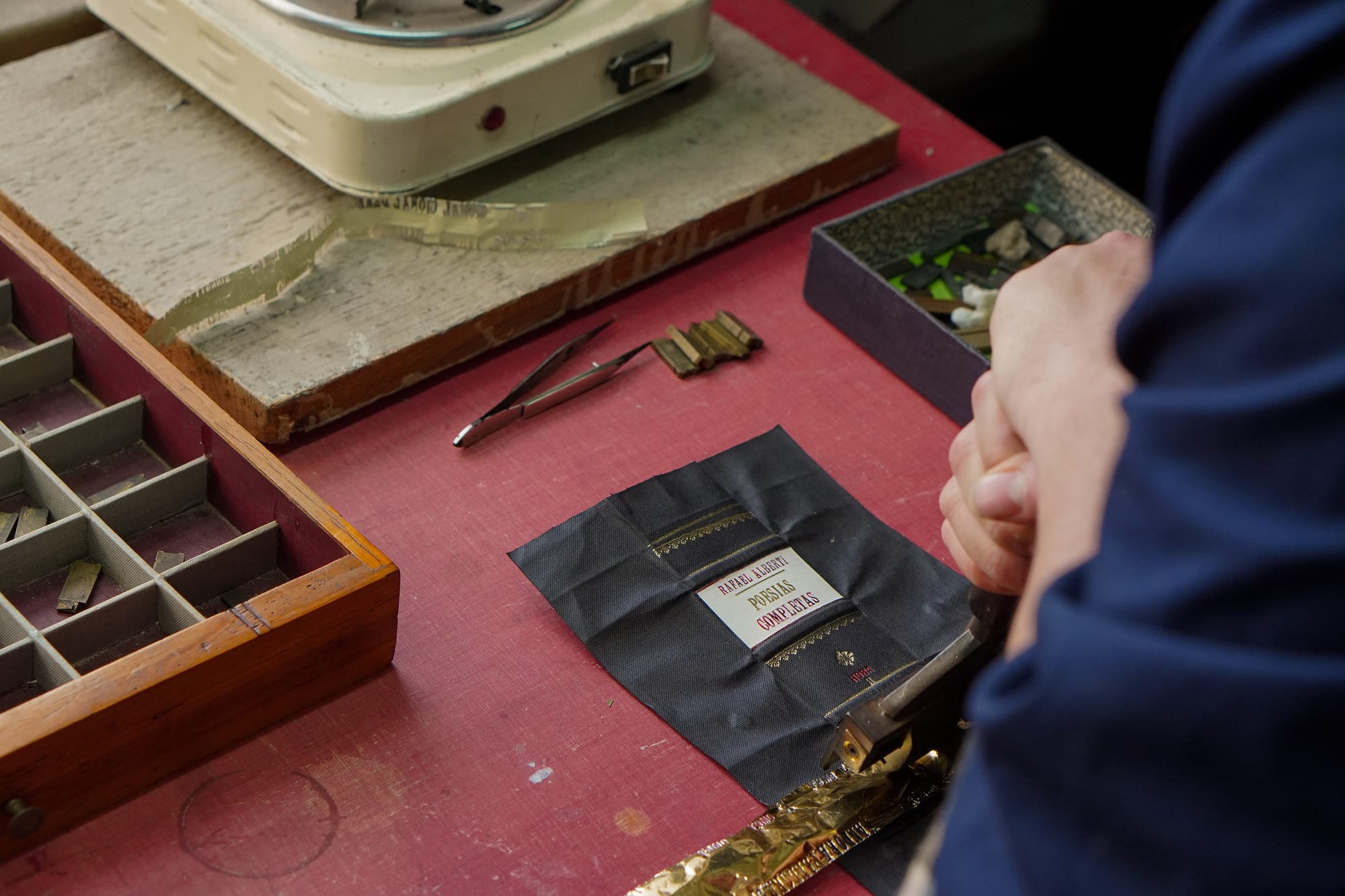
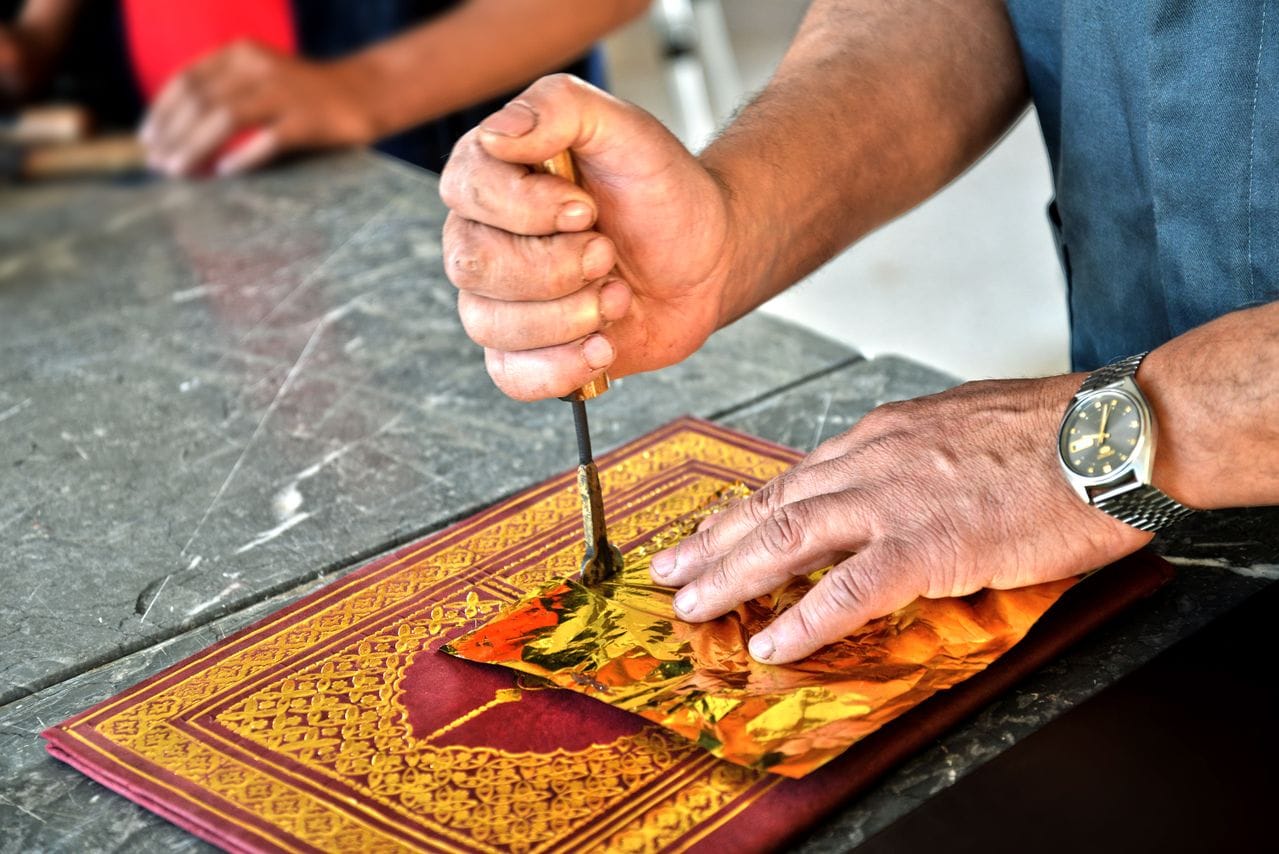
Gold leaf, heated tools, fillets, blind tooling and other ornamental tools can be used to create compositions across the covers and spine. Letters and decorative elements are impressed individually onto the surface in a process that requires careful control of temperature, pressure and position.
There is little room for error. A tool placed just a few millimetres out of position can leave a permanent mark on the leather.
Perhaps this is also part of the beauty of the craft: precision does not come from a machine eliminating every imperfection, but from hands that have learned to understand and control materials through years of practice and repetition.
When Should We Restore an Old Book?
Restoration introduces a different question.
How much should we change an object in order to preserve it?
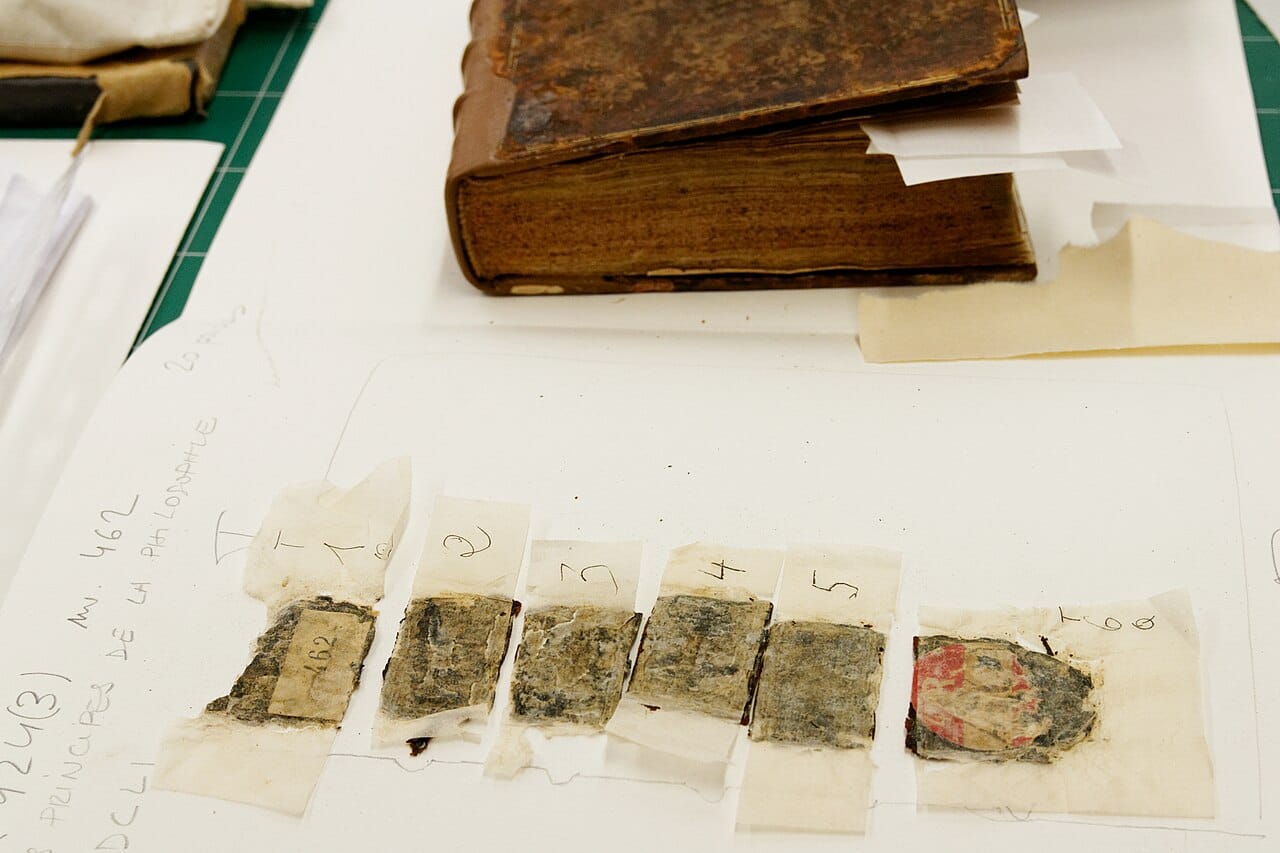
When we encounter an old, damaged book, our first instinct may be to try to return it to the way it looked when it was new. Conservation, however, begins from a different philosophy: the aim is not necessarily to erase the traces of time, but to stabilise the object and extend its life while respecting, as far as possible, its original materials and history.
Sometimes, therefore, the best intervention is the smallest one.
A worn leather cover, an old repair, a handwritten annotation or even certain imperfections may form part of a book's biography. If we remove them indiscriminately, we may also be removing evidence of where that book has been, how it was made or how it was used by those who owned it before us.
A good conservator must therefore know not only how to intervene, but also when not to.
When intervention is necessary, the work can be extraordinarily delicate: carefully dismantling an old volume without altering its structure, repairing tears, filling areas of lost paper, reconstructing sewing, consolidating weakened materials or restoring a cover while retaining as much of the original material as possible.
The aim does not have to be a perfect book.
It is about allowing an imperfect book to continue its journey.
Materials, Time and Memory
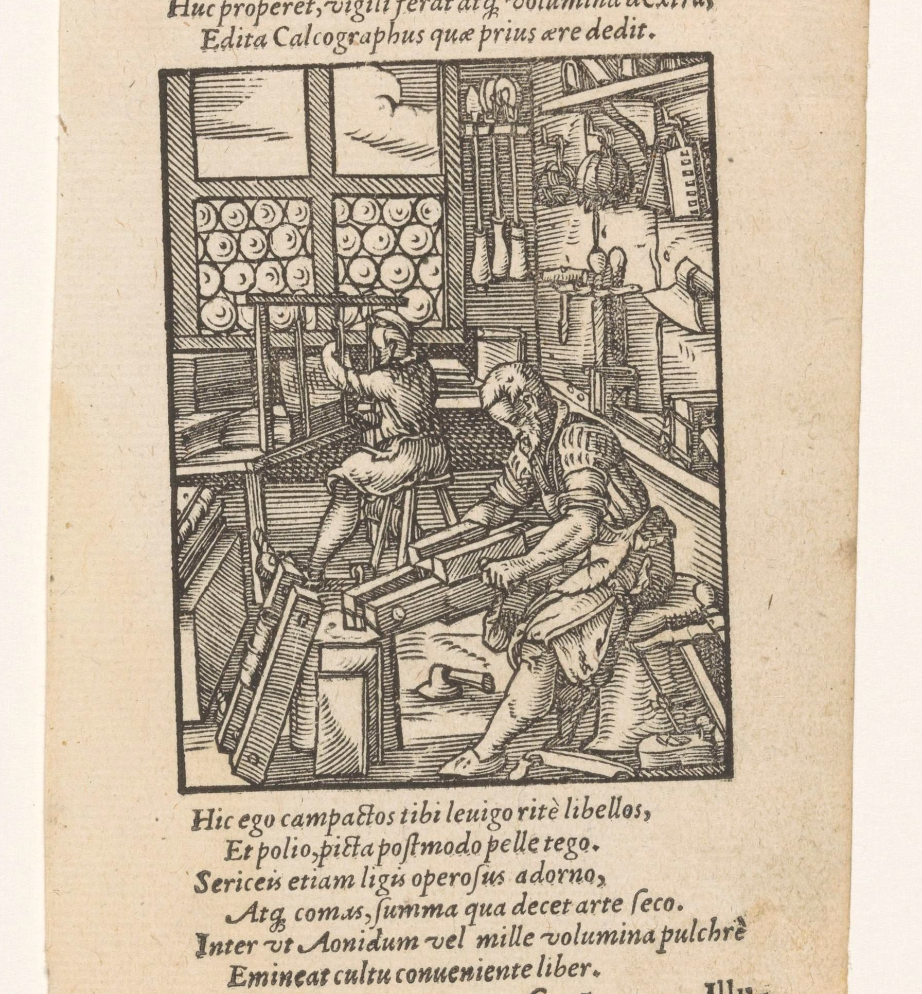
There is something particularly compelling about a craft devoted to making and preserving objects so that they endure.
A contemporary bookbinder folding paper, sewing sections or working a piece of leather is, in some way, participating in a chain of gestures that stretches back hundreds of years.
A 1568 woodcut by Jost Amman shows two bookbinders at work in their workshop. The tools, clothing and surroundings clearly belong to another age and yet, when we look at what they are doing, the craft remains surprisingly recognisable.
Perhaps that continuity also explains some of our fascination with old books. They remind us that making something slowly can be another way of relating to time, because the bookbinder does not work with books alone.
The bookbinder works with materials, time and memory.
Paper, thread, leather and gold are transformed through gestures repeated over centuries into objects conceived to outlive the hands that made them.
Perhaps that is where one of the greatest pleasures of books lies: in imagining that what we hold in our hands today may have been held by someone long before us and that, with a little luck, it will be held again by someone when we are no longer here.
Where Can I Have My Antique Books Repaired in Spain?
When a book has historical, artistic or simply sentimental value, choosing the right professional can be just as important as deciding whether it should be restored at all.
Before any intervention takes place, it is worth assessing the condition of the volume, its materials, its binding and its possible historical significance. In some cases, conserving and stabilising the book may be a far better decision than carrying out a complete restoration.
An Atelia Circle selection of traditional bookbinders and book conservators who keep this craft alive through their knowledge of materials, manual skill and, above all, respect for the history held within every book.
01
Rita Udina
PREMIÀ DE MAR · BARCELONA
Book Conservation · Restoration · Works on Paper
Rita Udina specialises in the conservation and restoration of books, documents and works on paper. Her studio has been active since 1999, working with institutions, companies and private collectors.
Her practice ranges from individual books to documentary and graphic heritage, including incunabula, manuscripts, first editions and bibliophile books. Each intervention begins with an understanding of the materials, structure and history of the object, with the aim of preserving as much of its original character as possible.
Atelia Selection
Studio
Rita Udina
Discipline
Book & Paper Conservation and Restoration
Location
Premià de Mar, Barcelona
Specialisms
Historical books, manuscripts, documents, works on paper,
incunabula and conservation
Best for
Historically significant books, manuscripts, documents
and specialist conservation
Website
ritaudina.com ↗
02
La Guineu Bindery
BARCELONA
Traditional Bookbinding · Restoration · Gold Tooling
La Guineu Bindery is a traditional bookbinding workshop in Barcelona led by Merlyn Dickson. Its practice combines hand binding with the restoration of antique books using traditional techniques and materials.
The workshop also works with leather and cloth bindings, decorative brass tools and traditional gold tooling. Its approach is particularly suited to books where restoration, functionality and the character of the original binding need to remain in careful balance.
Atelia Selection
Studio
La Guineu Bindery
Discipline
Traditional Bookbinding & Restoration
Location
Barcelona
Specialisms
Antique books, leather bindings, traditional restoration,
hand binding and gold tooling
Best for
Antique books, traditional leather bindings,
decorative finishing and personalised bookbinding
Website
guineubindery.com ↗
03
Ana Jessen
MADRID
Antique Book Restoration · Fine Binding · Bibliographic Heritage
With a background in Art History, Ana Jessen has developed her practice around the restoration, conservation and traditional binding of books, approaching each volume as both a cultural object and a material record of its time.
Her work covers antique and contemporary books in paper, leather, cloth and parchment, together with historical binding traditions. She has also worked with bibliographic heritage collections and institutional projects, combining restoration with the transmission of traditional bookbinding knowledge.
Atelia Selection
Studio
Ana Jessen
Discipline
Book Restoration, Conservation & Fine Binding
Location
Madrid
Specialisms
Historical bindings, leather, parchment, cloth,
bibliographic heritage and traditional bookbinding
Best for
Valuable antique books, historical bindings,
bibliographic heritage and specialist restoration
Website
anajessen.com ↗
04
Estudio Taller Abad
BARCELONA
Bookbinding · Book & Paper Restoration · Bespoke Projects
Estudio Taller Abad combines traditional bookbinding with the conservation and restoration of books, documents and works on paper. Each piece is approached individually, taking into account its materials, condition, history and future use.
Alongside conservation work, the studio also develops bespoke bindings, artist books, albums and special projects, bringing together technical knowledge and a contemporary approach to craftsmanship.
Atelia Selection
Studio
Estudio Taller Abad
Discipline
Bookbinding & Book and Paper Restoration
Location
Barcelona
Specialisms
Book restoration, paper conservation, bespoke bindings,
artist books and special projects
Best for
Antique and sentimental books, bespoke bindings,
paper conservation and unique projects
Website
estudiotallerabad.com ↗
Written by
Subscribe to our newsletter
Subscribe to our newsletter to get the latest updates and news