The Menorcan style: when English furniture took root on the island

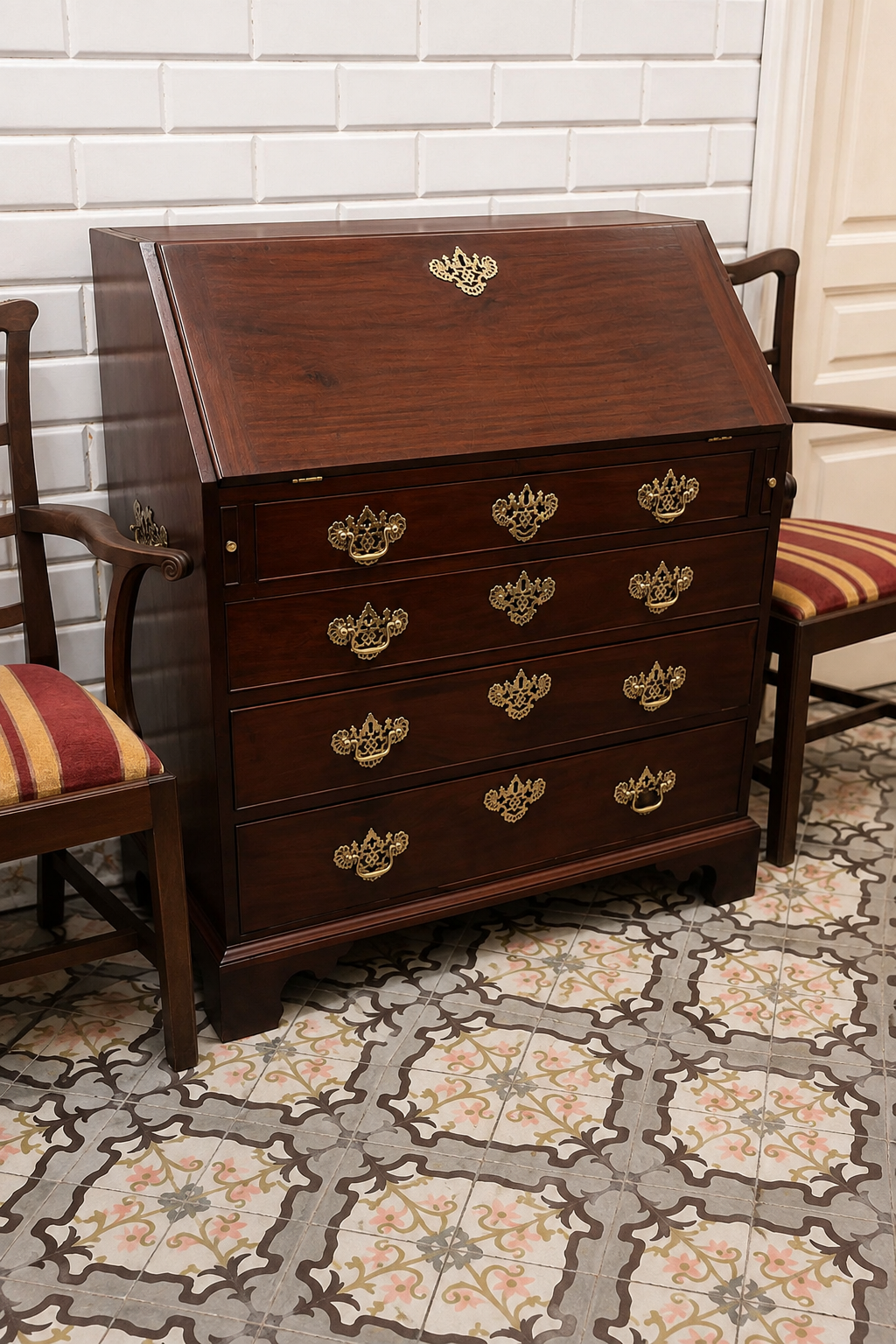
During the eighteenth century, under British rule, Menorca entered a period of economic and cultural change. From London came new ways of governing and living, along with artistic fashions that the island’s craftsmen absorbed, altered and made their own.
The influence was everywhere: on façades and behind closed doors, in the townhouses of Mahón’s historic centre and in the interiors of country estates that still preserve much of their original decoration.
English furniture provided the starting point. Menorca took it elsewhere.
Over time, imported forms acquired a local vocabulary—quieter, more restrained and shaped by the needs of island homes. What emerged was neither a faithful copy nor a provincial imitation, but a recognisable style in its own right: the Menorcan style.
Objects often carry cultural history better than dates do. A chair, a desk, a chest of drawers or a longcase clock can reveal trade routes, shifts in taste and the rhythms of domestic life.
In Menorca, such furniture has a presence of its own. It tells political stories, social stories and, sometimes, love stories too.
An island between two cultures
At the end of the War of the Spanish Succession, Menorca passed into British hands. Governors such as Richard Kane introduced administrative reforms, improved communications across the island and oversaw work on the port of Mahón, which the British established as the island’s capital.
Then control changed again.
British, French and Spanish forces succeeded one another until the Treaty of Amiens returned Menorca to Spain in 1802. Governments came and went; their traces remained.
Architecture survived. So did customs, household objects and ways of making furniture closely tied to the main English styles of the period: Queen Anne, Chippendale, Hepplewhite and Sheraton. Names that had already shaped British interiors now appeared inside Menorcan homes—translated into another climate, another scale and another way of life.
From oak to mahogany
The evolution of furniture can be read through timber.
In the earlier Tudor and Stuart periods, oak dominated. With the Queen Anne style, walnut came to the fore. Then, as the eighteenth century advanced, mahogany began to define Chippendale furniture.
The change mattered. Mahogany allowed cabinetmakers to produce lighter pieces, cut intricate details with greater accuracy and polish surfaces to a deep, even finish.
Central to that shift was Thomas Chippendale, the Yorkshire-born cabinetmaker who published The Gentleman and Cabinet-Maker’s Director in 1754. More than a trade catalogue, the book circulated designs across Britain and beyond, helping to establish what became known as the Chippendale style.
Its sources were mixed: British cabinetmaking tradition, French Rococo, Gothic architecture and Europe’s growing fascination with Chinese decoration. Together, they formed an unusually flexible language—one capable of travelling far beyond England.
The chair as a statement
Few pieces reveal those influences as plainly as a chair.
In Chippendale designs, the backrest does much of the talking: geometric structures, interlaced ribbons, Gothic tracery and motifs drawn from Chinese decorative art appear in endless combinations.
Front legs may be straight, cabriole or turned. On some models, they end in a claw gripping a ball. Acanthus leaves, rosettes and scrolls complete the ornament.
But this vocabulary didn’t belong to chairs alone. It spread across desks, chests of drawers, display cabinets, mirrors, clocks and console tables—an entire domestic world shaped by the same visual grammar.
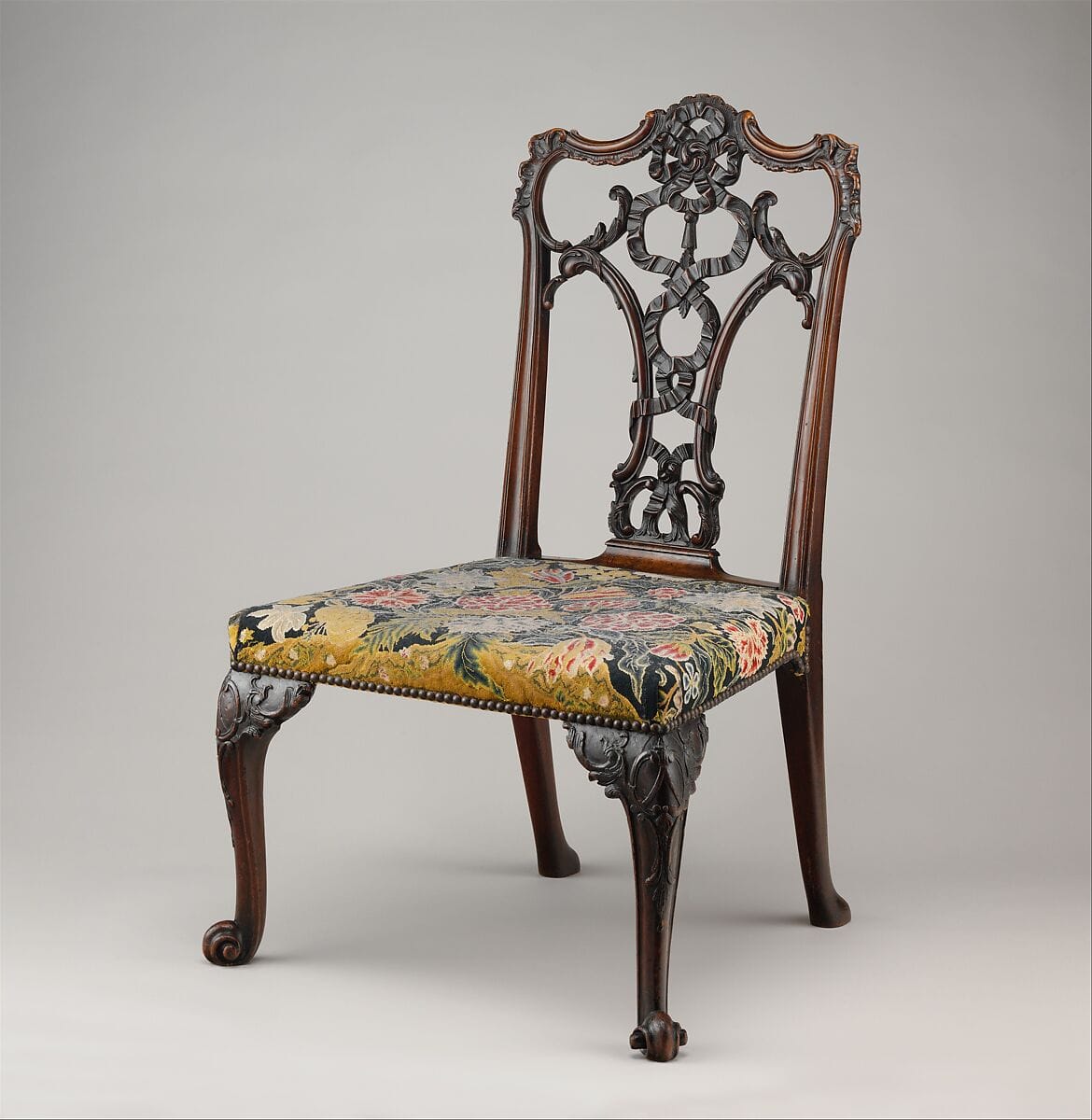
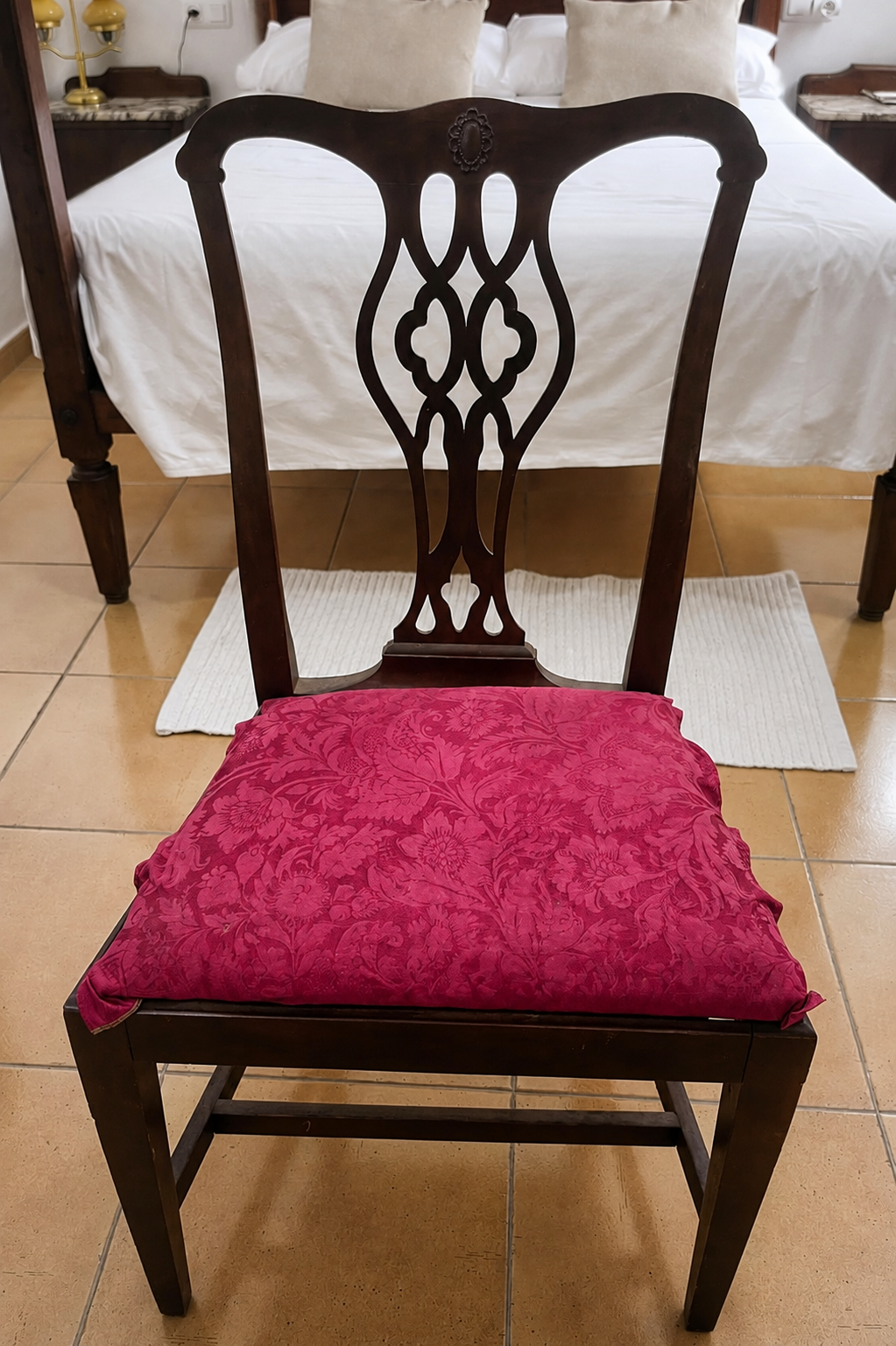
Chippendale chair in The Met Museum 1755-1760 and Menorcan Chippendale chair undergoing restoration. 18th century
When Chippendale reached Menorca
Not every English-style piece found in Menorca came from England.
Some were imported. Others were made by Menorcan cabinetmakers, working with the materials at hand and adapting each design to the practical demands of island houses. There lies the particular character of Menorcan furniture: it began not as a copy, but as a local reading of British design.
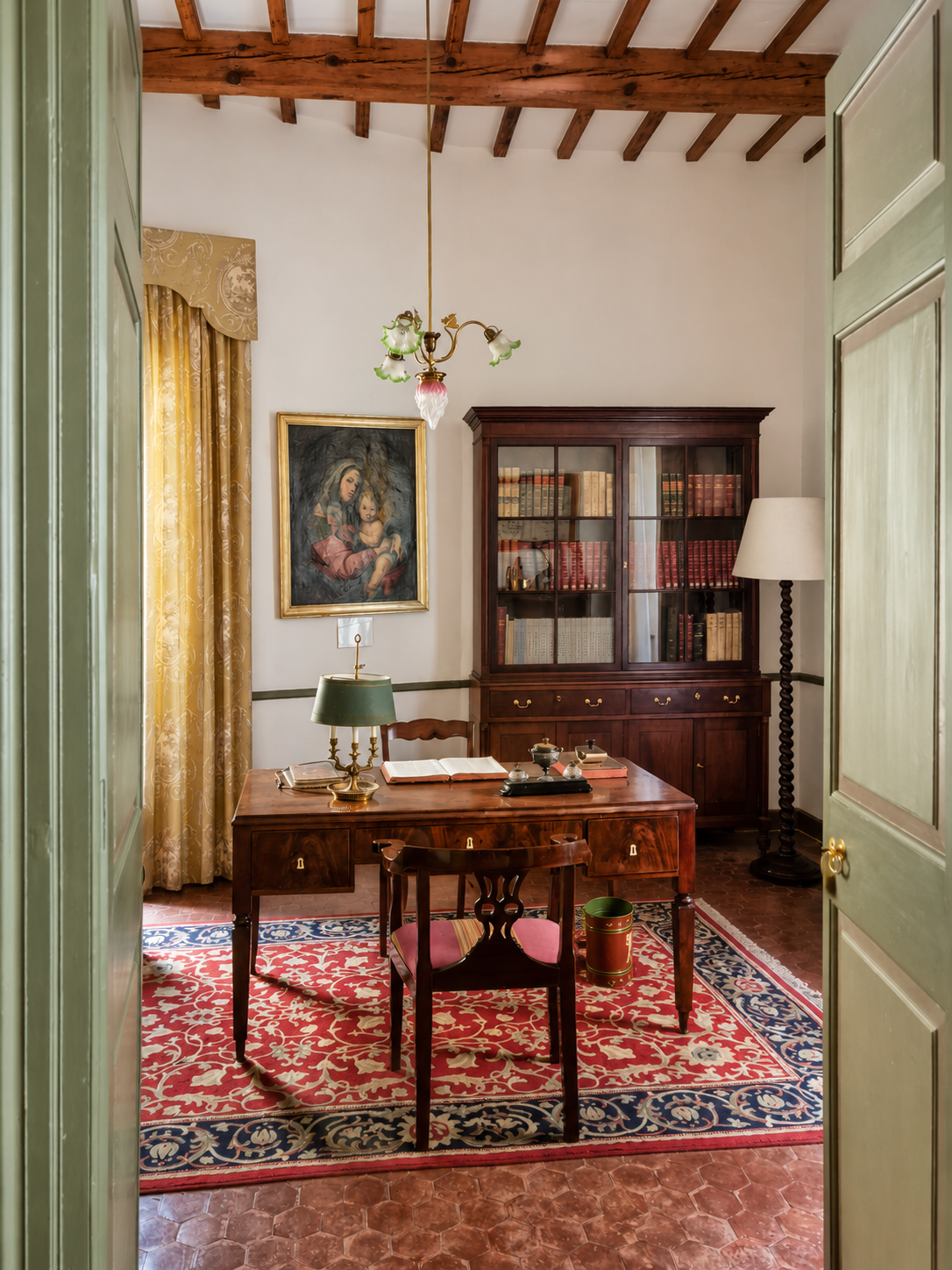
In the surviving pieces, influences from several periods and designers can still be traced—Queen Anne, Chippendale, Robert Adam, Hepplewhite and Sheraton. Yet their decoration is usually held in check.
The proportions remain elegant. Cabriole legs, pierced splats and carefully worked mouldings are all present, but the exuberance of some British models is gone. In that restraint, the Menorcan character comes sharply into view.
Elegance, without excess
Simplicity is one of the defining features of the Menorcan style.
Queen Anne-inspired chairs often have plain backrests, sometimes taller than their English counterparts. Others move closer to Chippendale, with ribbon-like forms, vertical compositions and geometric patterns.
Hepplewhite brought shield-shaped backs. Sheraton made the lines straighter, lighter and more delicate. In Menorca, each influence was recognised, pared down and adjusted—never erased, never followed blindly.
Desks, bookcases and clocks
The exchange between English tradition and local workmanship appears just as clearly in other types of furniture.
Some Menorcan desks have elegant lines and a disciplined arrangement of drawers and small compartments, recalling Queen Anne models. Others sit much closer to Chippendale proportions.
Bookcases generally consist of two sections. Below are drawers and enclosed storage; above, glazed doors framed by mouldings and cornices that recall the neoclassical style so prevalent in the eighteenth century.
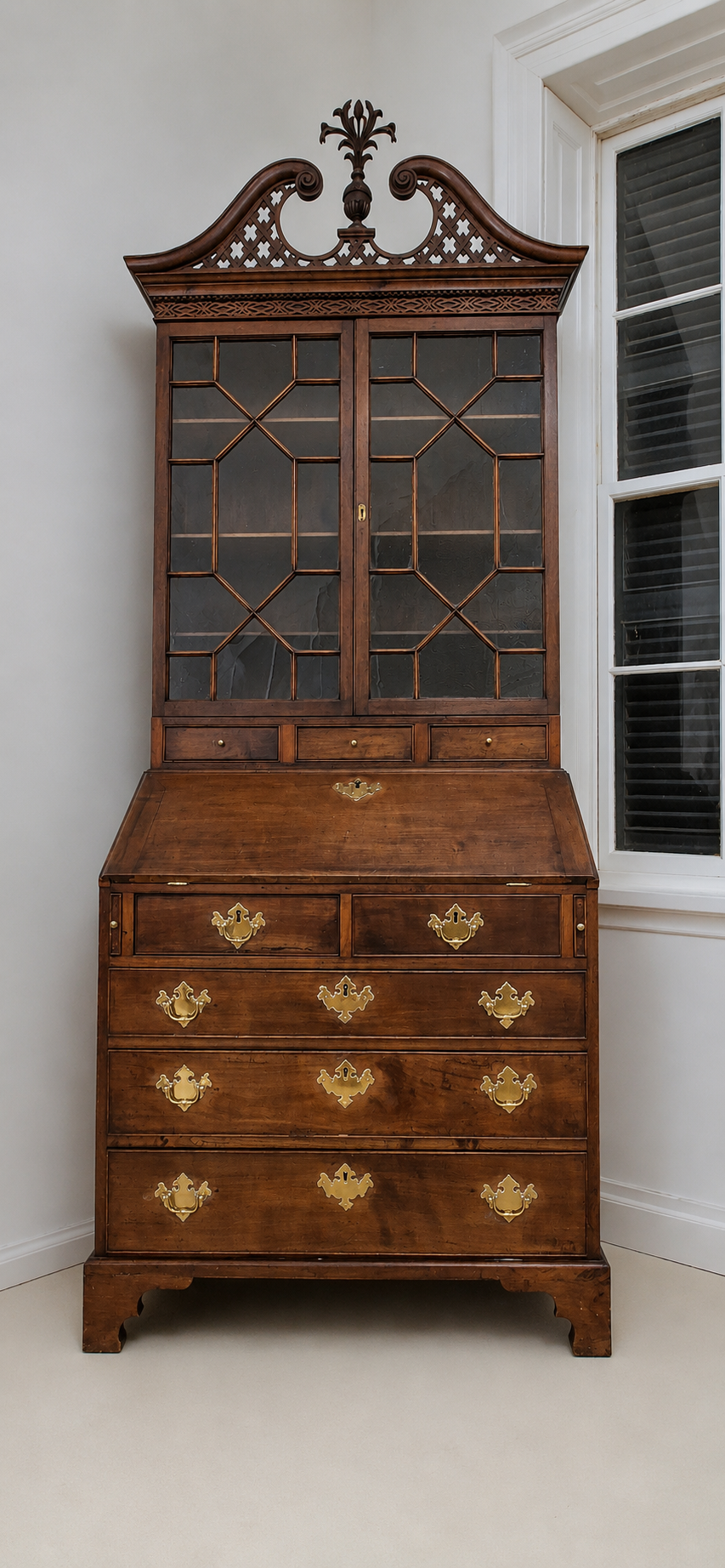
Chests of drawers vary widely. Some stand on small angled feet. Others have the curved outlines found in British models of the period.
Then there is the clock.
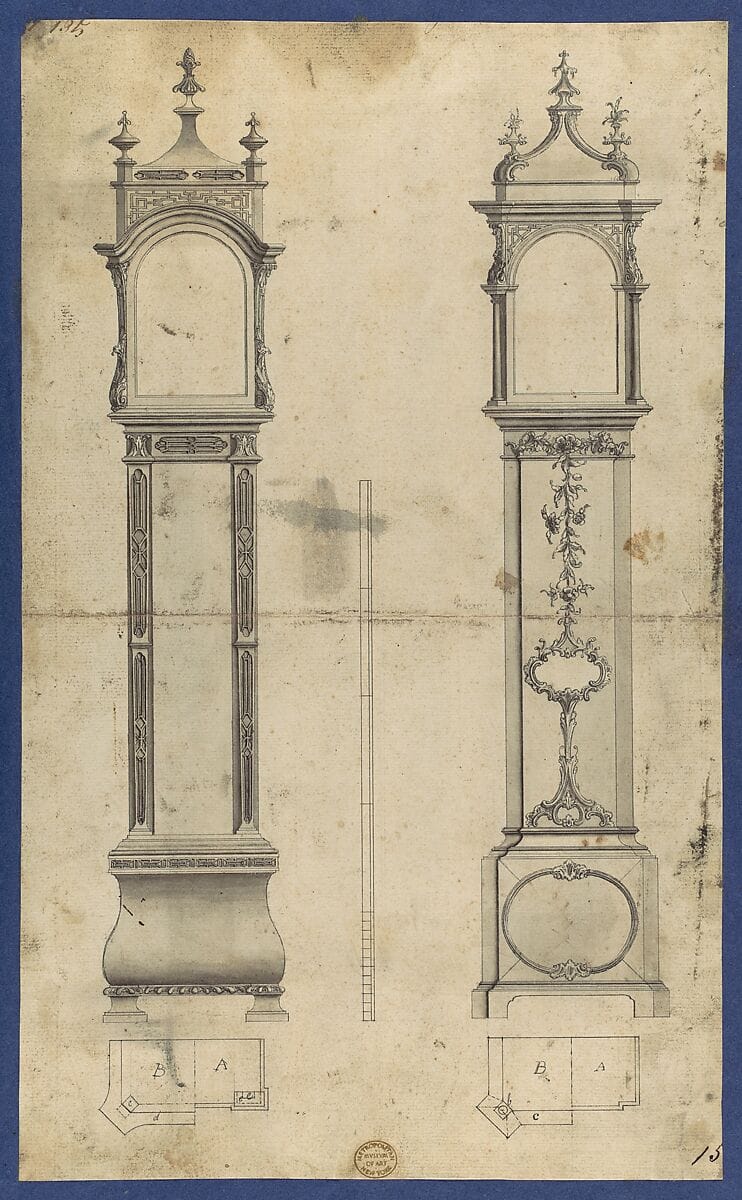
More than almost any other piece, it makes itself felt in a room. Surviving Menorcan longcase clocks sometimes have cases crowned by small domes, with mouldings and columns framing the dial. The Queen Anne influence is easy to see, though the ornament is quieter.
That balance runs through much of the island’s furniture: its foreign ancestry remains apparent, but the objects themselves no longer feel foreign.
Furniture as memory
For generations, these pieces have remained inside Menorcan homes. They’ve stood in bedrooms, dining rooms and sitting rooms, holding clothes, books, tableware and family papers.
Passed from one generation to the next, they were repaired, moved and used long after the political world that produced them had disappeared.
Borders shift. Furniture stays.
A map can change sovereignty overnight; a desk remains in the same room, preserving connections that outlive the institutions behind them. That is why the Menorcan style occupies such a singular place in the island’s history.
A style born through adaptation
Menorcan furniture shows that styles never travel unchanged.
Objects alter when they encounter different materials, different homes and different uses—above all, when new craftsmen take them in hand. Menorcan cabinetmakers learned from one of Europe’s major furniture traditions, then adjusted it to their surroundings. British forms became simpler. Ornament grew more sober. Proportions shifted.
From that process came furniture both familiar and unmistakably local.
Born from a political episode that transformed Menorca, these pieces still hold attention today. The imprint remains—in the curve of a leg, the line of a backrest, the measured decoration of a cabinet—on an island that once lived between two worlds and turned the encounter into a way of making.
Written by

Subscribe to our newsletter
Subscribe to our newsletter to get the latest updates and news