When a Private Collection Becomes a Museum

The Blaquier-Arrieta Collection and the art of collecting beyond the market
Some of the most important paintings of Impressionism and Post-Impressionism have remained out of public view for more than half a century. They were not stored away in museum archives. They belonged to a private collection.
This November, twelve of those works return to the market.
Sotheby’s will offer the Blaquier-Arrieta Collection in New York, assembled since the 1960s by Argentine collectors Carlos Pedro Blaquier and Nelly Arrieta de Blaquier. The group includes works by Claude Monet, Edgar Degas, Pierre-Auguste Renoir, Camille Pissarro, Vincent van Gogh, Paul Cézanne, Paul Gauguin, Alfred Sisley, Henri de Toulouse-Lautrec, André Derain and Maurice de Vlaminck.
Together, these twelve paintings carry an estimated value of close to $450 million — and something far more difficult to quantify: the reappearance of works that for years had belonged to the same private story.
Perhaps for that reason, it is tempting to speak only of records. But to do so would be to miss the most interesting part of the collection, because the story of Blaquier-Arrieta raises another question:
What does it really mean to build a collection?
Collecting before everything became visible
Today, we see art everywhere: at auctions, fairs, on Instagram, in catalogues, newsletters and databases. But let us turn our attention to a time when communication was far less immediate.
For much of the twentieth century, collecting worked differently.
Carlos Pedro Blaquier and Nelly Arrieta began acquiring works in the 1960s. Over several decades, they worked with some of the most important dealers of the period, including the Lefevre and Wildenstein galleries. Some of the paintings now returning to the market had previously belonged to major collections such as those of Albert Lasker, Norton Simon and Lord Rothschild.
During the 1970s and 1980s, the Blaquiers travelled frequently to London, acquiring there some of the works that would come to define their collection. Seven of the twelve paintings now heading to auction came from Lefevre Gallery.
But what is so important about this way of collecting?
It is not simply about recognising an important name. It is about knowing how to distinguish which work deserves a place within a collection.
There is a great difference between owning a Cézanne and living for years with Arlequin, or between buying a Van Gogh and acquiring a painting made in Auvers-sur-Oise shortly before his death.
A collection is not built by accumulating signatures. A collection builds a narrative.
A small history of modern painting
Taken as a whole, the Blaquier-Arrieta Collection is a condensed history of the evolution of modern painting.
The works trace a path from the early Impressionist experiments of the 1870s to the liberation of colour that would lead to Fauvism at the beginning of the twentieth century.
Take Claude Monet’s Le Jardin des Tuileries, painted in 1876.
Paris is viewed from an elevated position, but rather than simply depicting the city, Monet seeks to capture something more unstable: the way light and atmosphere transform the scene before us.
In Pierre-Auguste Renoir’s En Canot (Jeune fille à la barque), an apparently simple scene belongs to the very moment when the Impressionists were redefining which subjects could be considered worthy of painting. The work is estimated at between $25 million and $35 million.
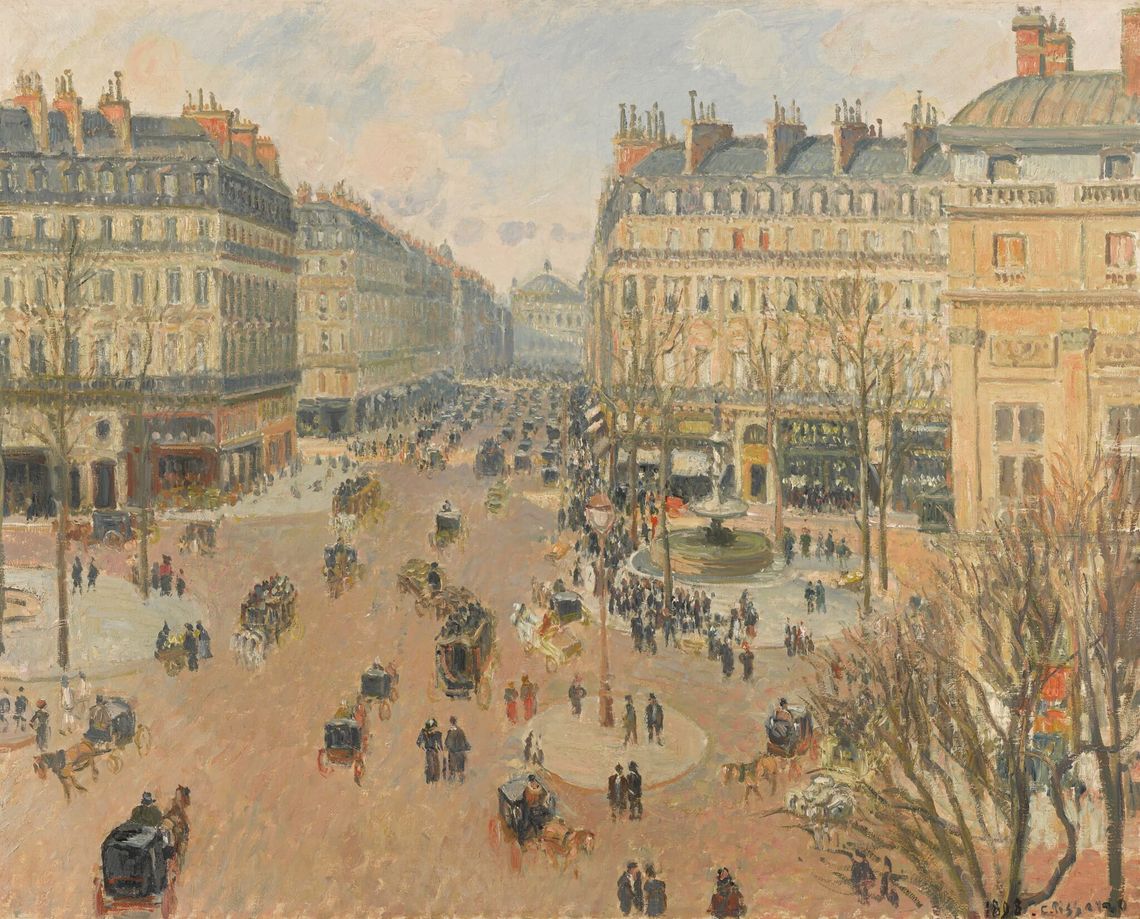
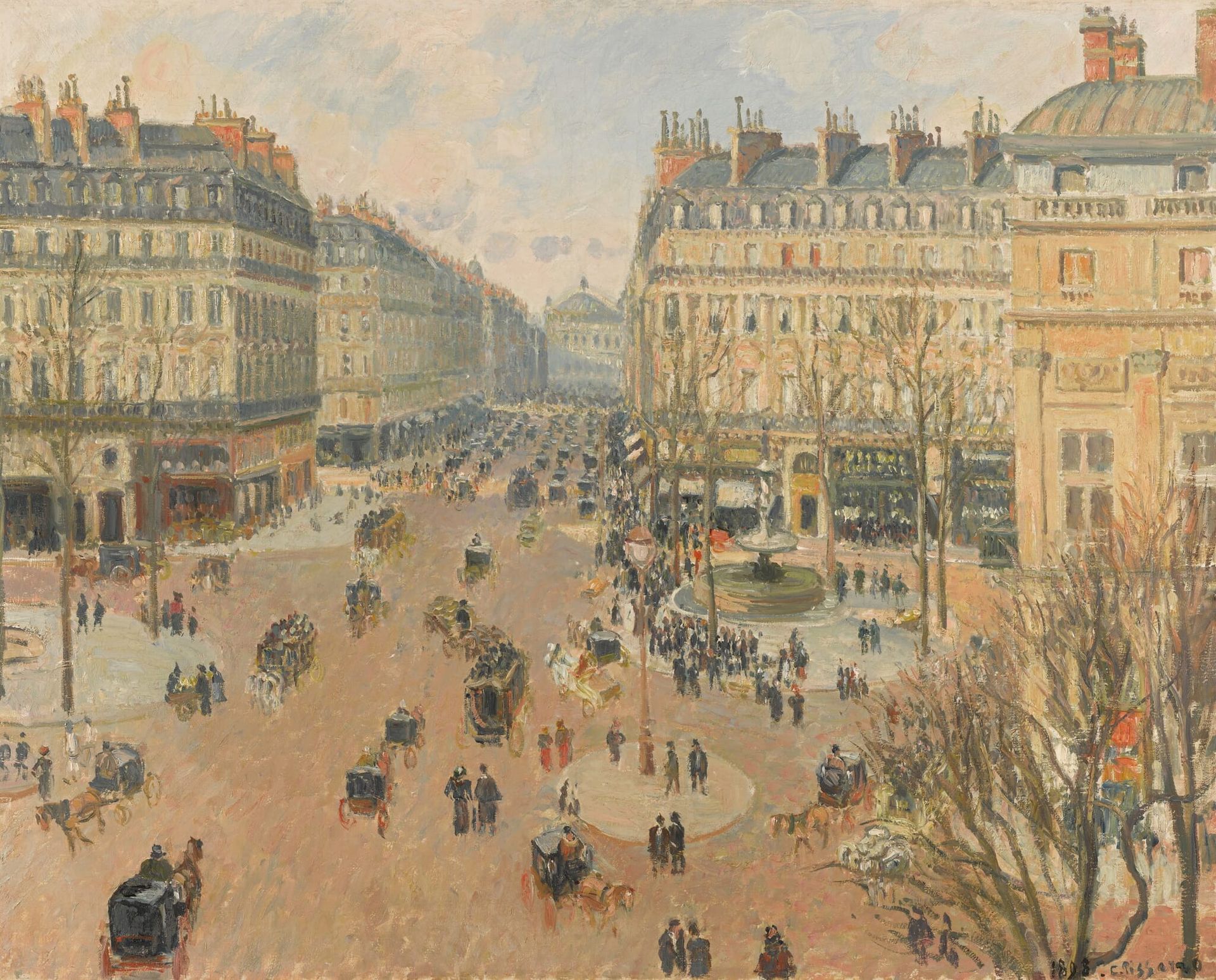
A few decades later, Camille Pissarro would look again towards Paris. In La Place du Théâtre-Français et l’avenue de l’Opéra, soleil d’après-midi en hiver, painted in 1898, the scene takes on a vibrant quality: carriages, architecture and light seem to become part of a single organism. The work is estimated at between $30 million and $40 million.
But what is distinctive about this collection is that it does not stop with Impressionism. It continues precisely where that movement begins to fragment.
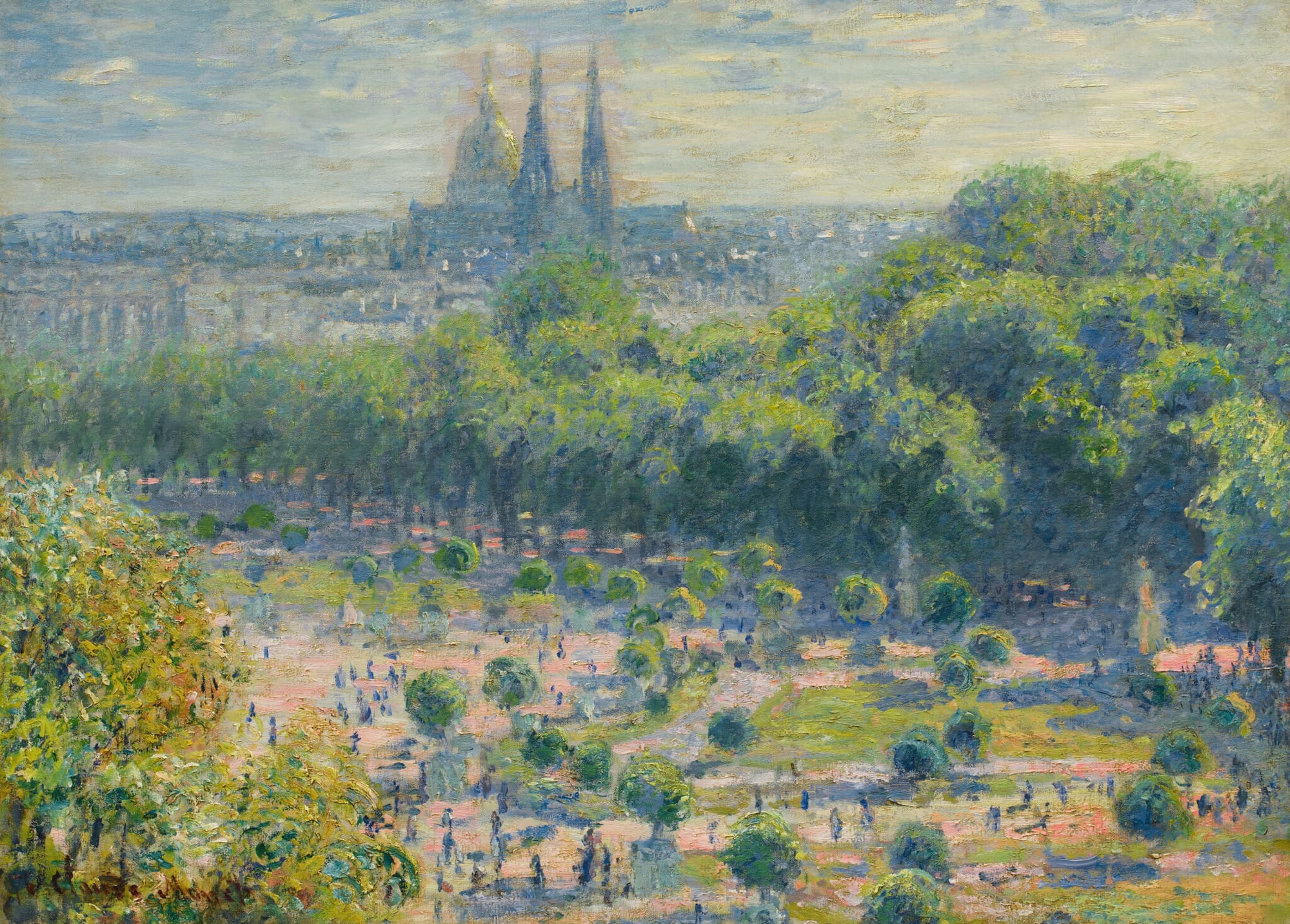
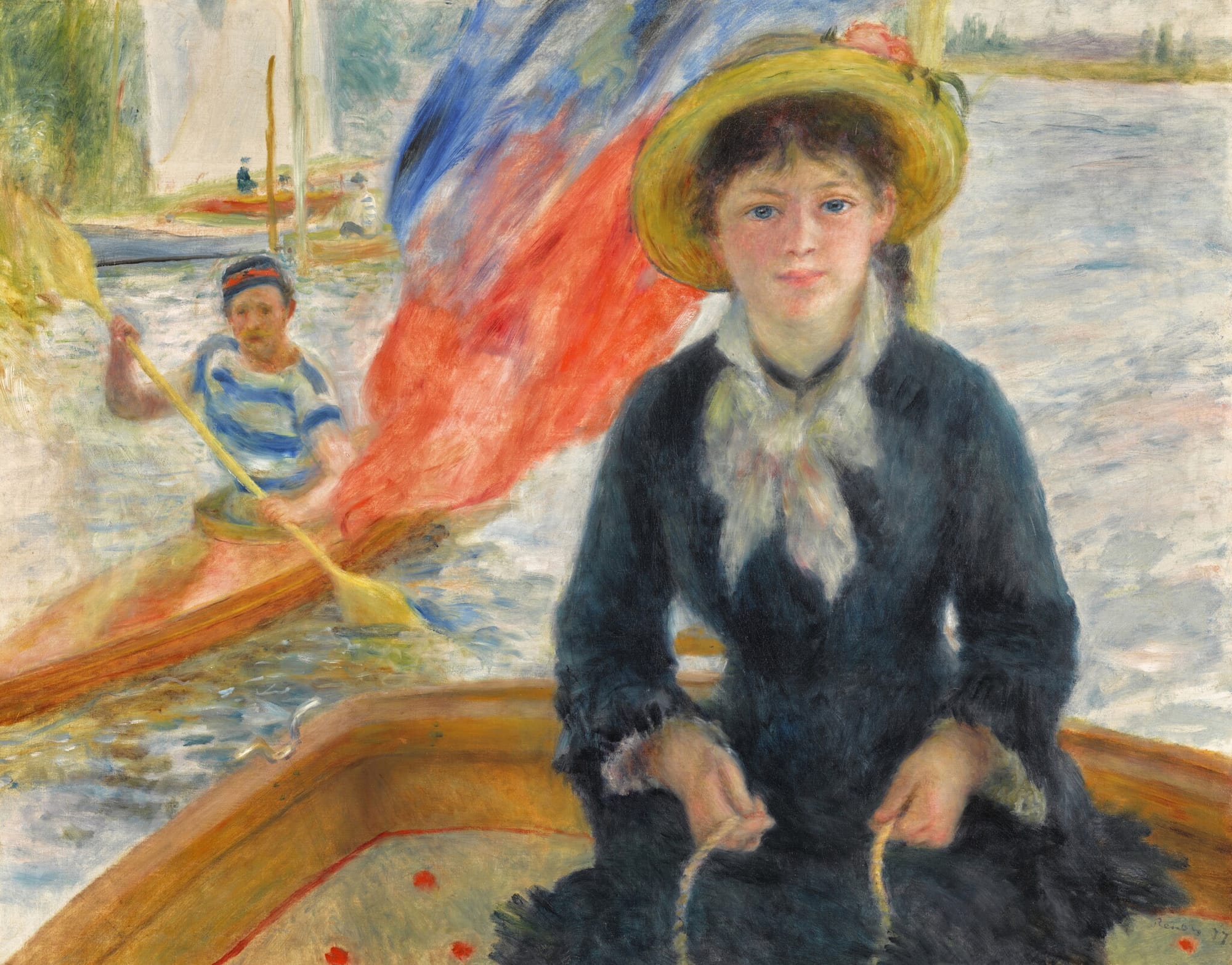
Claude Monet - Le Jardin des Tuileries / Pierre-Auguste Renoir - En Canot (Jeune fille à la barque)
The paintings that change the direction
One of the protagonists of the sale is Paul Cézanne. In his Arlequin, painted between 1888 and 1890, Cézanne portrays his son dressed in the characteristic harlequin costume. Yet here, the figure becomes almost secondary to the experiment taking place across the surface of the painting. The body becomes structure. Planes begin to matter more than naturalistic representation, and painting starts to free itself from the obligation to reproduce the visible world.
Sotheby’s estimates that the work could reach $120 million. It is also the only one of Cézanne’s four major harlequin paintings to remain in private hands.
Close to this turning point we find Vincent van Gogh.
The artist painted Châtaigniers en fleurs in Auvers-sur-Oise in May 1890, during the final months of his life. Here, the landscape appears to move. The brushstrokes no longer attempt to disappear. The painting does not simply describe what the artist has in front of him, but the way in which he sees it. The work is valued at around $180 million, which could make it one of the most expensive Van Goghs ever sold at auction.
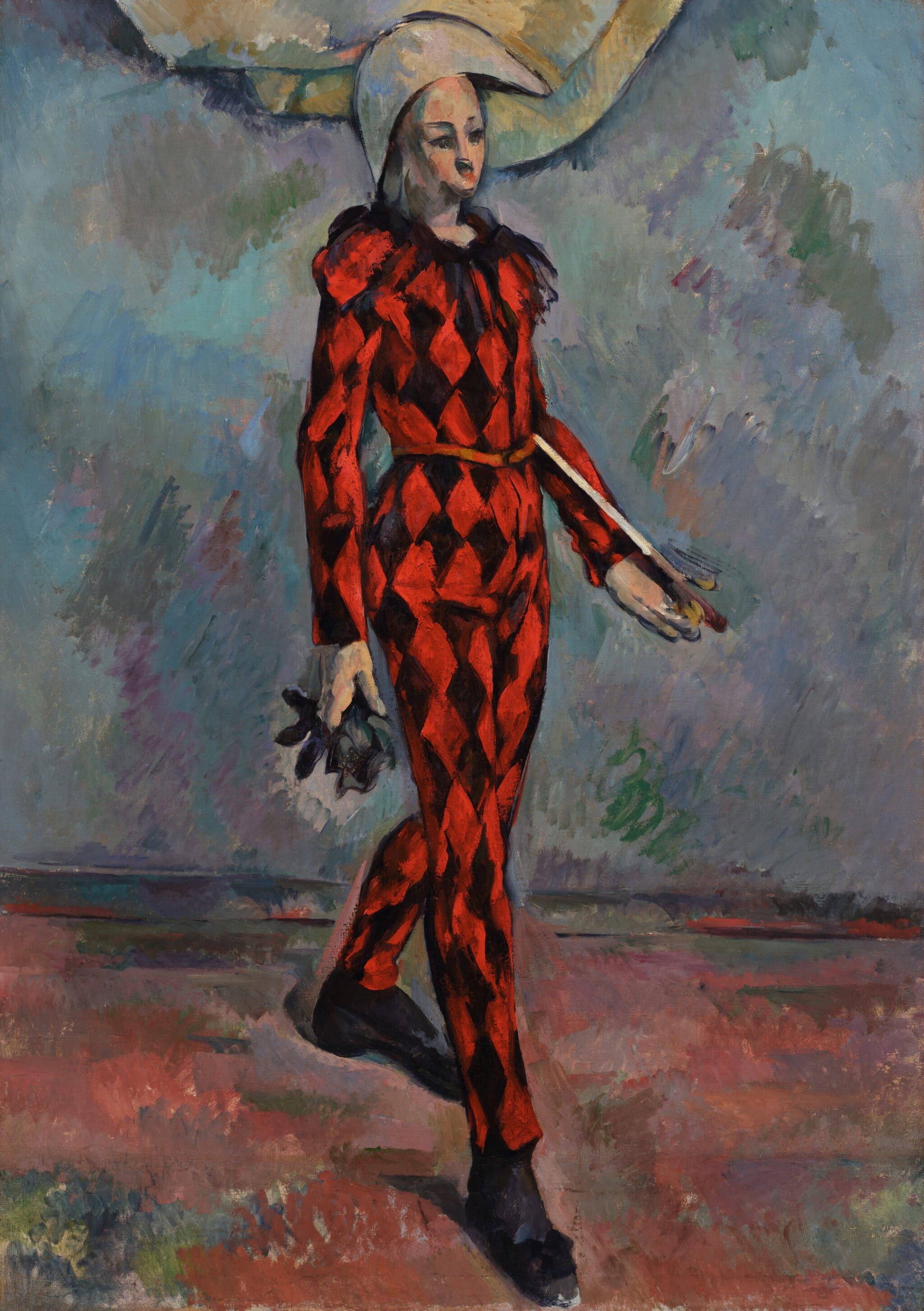
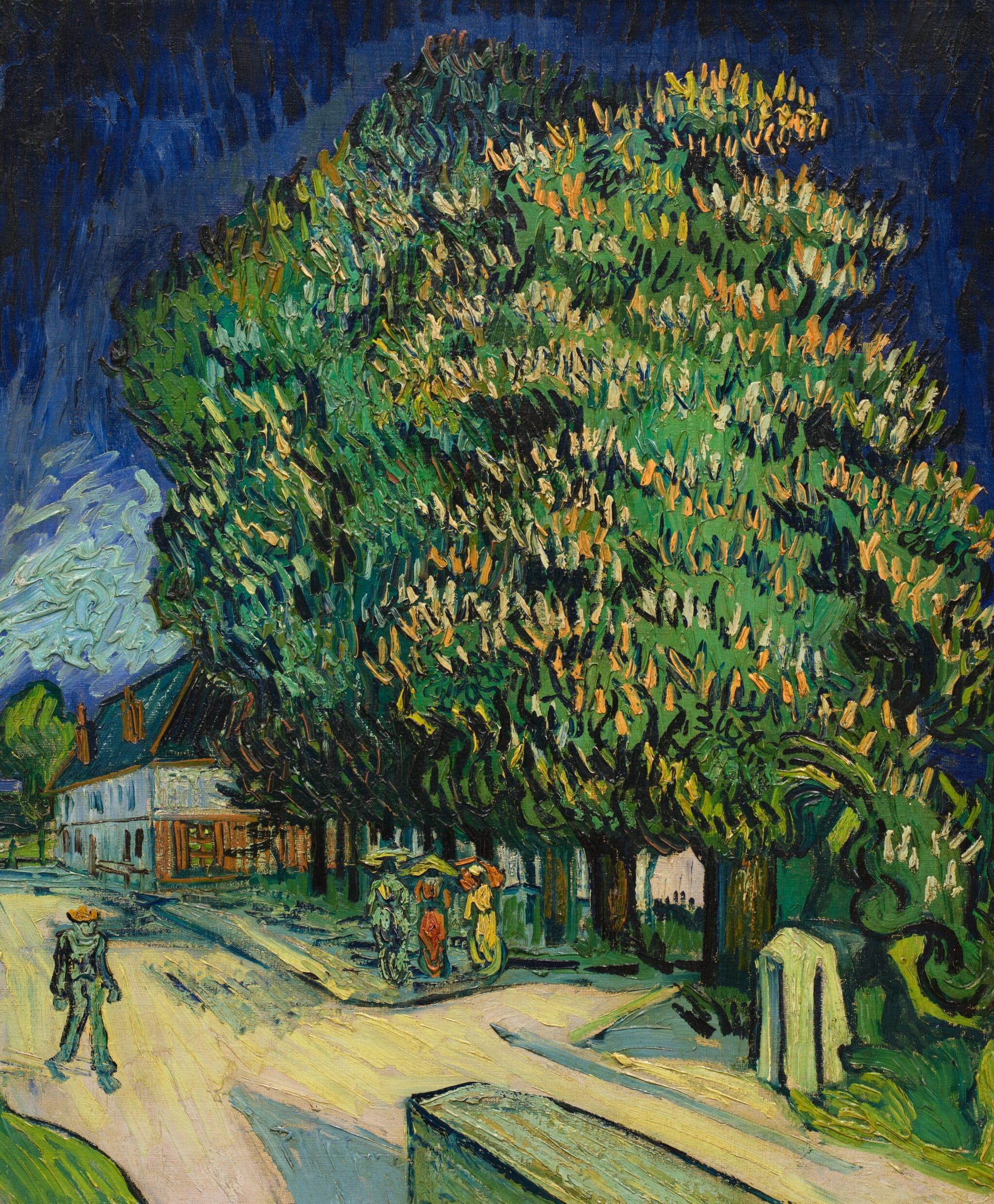
Paul Cézanne - Arlequin / Vincent van Gogh - Châtaigniers en fleurs
From observation to colour
The collection moves forward. Gauguin appears with a still life painted during his final years in Tahiti. Then come André Derain and Maurice de Vlaminck.
Here, colour no longer obeys nature. What we are looking at begins to matter less than what painting itself is capable of doing.
In this journey — from Monet to Derain, from Impressionism to Fauvism — there is a clear narrative.
What happens when painting no longer needs to resemble the world?
The collector behind the collection
A collection does not speak only about the artists it contains. It also speaks about the person who built it.
Nelly Arrieta de Blaquier played an important role in shaping this group of works, while maintaining throughout her life a close relationship with cultural and educational institutions and philanthropic initiatives in Argentina and abroad. This allows us to understand the collection from another perspective.
Collecting is knowledge.
A collection records relationships with dealers, opportunities and decisions. One painting begins to explain why another deserves to enter. Over time, the works begin to relate to one another, and at that moment, the collection is no longer simply a group of objects, It acquires an identity of its own.
What disappears when a collection is dispersed
On 18 November, Sotheby’s will auction the twelve paintings individually in New York. They will most likely end up in different places. Some may enter new private collections, while others may eventually reach museums.
It is also possible that some will disappear from public view once again. The market will determine their price, but there is one transformation that no figure will ever fully reflect. The collection will cease to exist as a collection.
This is often overlooked during major auctions. We focus on the price reached by each work, on which record has been broken, or on how many millions an estimate has been exceeded.
Yet when a historic collection is dispersed, something else disappears too: the relationship built over decades between objects that someone, at some point, decided should remain together.
Written by

Subscribe to our newsletter
Subscribe to our newsletter to get the latest updates and news