
Where Craft Survives I


For centuries, the arts have been passed down through observation, trial and error, years of practice and refinement, experimentation with new materials, and the gradual mastery of how to work with them.
All of this has shaped the way we value handmade work. When we look at a work of art or a crafted object, we instinctively think about the time invested in making it, the maker’s ability to understand the medium, the patience required to develop the technique, and the motivation needed to carry a process through.
Today, perhaps more than ever, we value something increasingly scarce. TIME.
That knowledge now often has a new point of departure: the school.
But the question remains open: what happens when an art or craft that was once passed from master to apprentice, generation after generation, needs a school in order to survive?
In this special series, we look at some of Europe’s leading schools of arts and crafts.
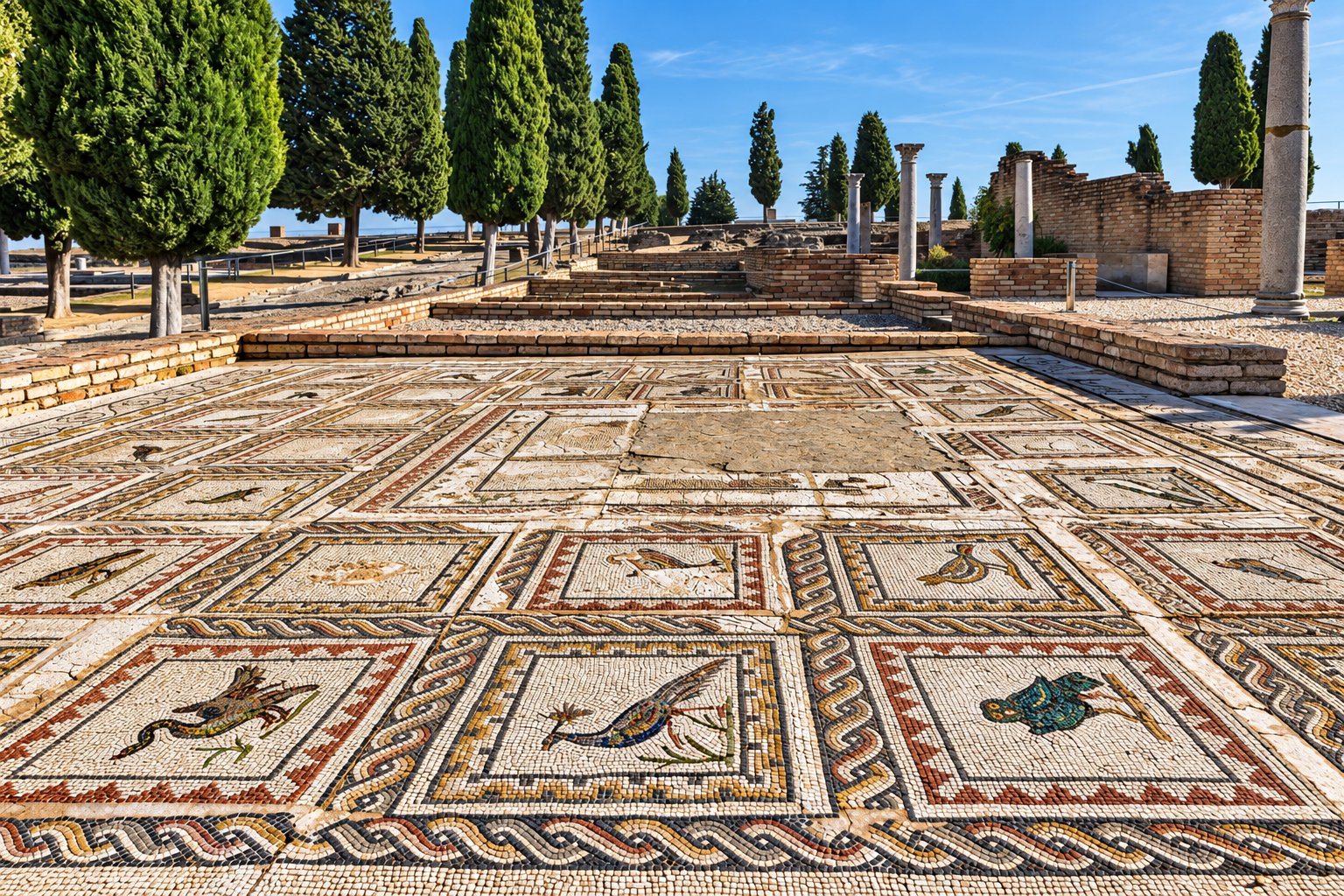
Mosaic — Spilimbergo, Italia
Scuola Mosaicisti del Friuli
An art associated with prestige since Roman times, mosaic still appears today at the highest levels of interior design. Its decorative value remains considerable, but so does the appreciation of the patience and time required to complete a composition of any significant scale.
A public school specialising in the teaching and preservation of mosaic, the Scuola Mosaicisti del Friuli combines education, production and the promotion of the craft.
Founded in Spilimbergo in 1922, although the region’s connection with mosaic goes back much further, the school aims to build bridges between tradition and innovation. It encourages a broader sensitivity towards the medium through encounters with artists and designers, while producing major projects of international relevance based on the study and application of Roman, Byzantine and modern mosaic.
Learning begins with the materials themselves: stone, glass and enamel, cut into small tesserae before being placed one by one. Students are trained in drawing, colour, composition and historical techniques, while also exploring contemporary applications.
This coexistence between past and present is what makes Spilimbergo distinctive.
Mosaic is not preserved as a relic, but remains a living craft, still learned much as it has been for centuries: stone by stone.
Weaving — Guardistallo, Toscana
Tessitura del Mandorlo
Set in the village of Guardistallo, on the hills overlooking the Tuscan coast, Tessitura del Mandorlo preserves the teaching of hand weaving on a deliberately intimate scale. The school is run by Pat Kinsella, an artist and teacher with more than forty years of experience in weaving, design and education.
The studio occupies an eighteenth-century building that once housed a convent. Today, it is filled with floor and table looms, yarns and weaving tools.
Classes are limited to a maximum of six students. Beginners learn how to operate a loom, understand the relationship between warp and weft, prepare and thread the loom, and read a pattern from the first idea through to the finished textile. More advanced students can explore techniques such as leno weaving, multilayer structures and passementerie.
Guardistallo is not an institution designed for large groups. It is a quiet place where an ancient process is learned through observation, repetition and direct contact with the material.
Learning to weave also means learning to experience time differently.
Basketry — Fayl-Billot, Francia
École Nationale d’Osiériculture et de Vannerie / CFPPA de Fayl-Billot
https://faylbillot.educagri.fr/cfppa/formations/cap-vannerie
In Fayl-Billot, in France’s Haute-Marne region, basketry is more than a manual technique: it forms part of the identity of the place. The current CFPPA occupies the historic building of the École Nationale d’Osiériculture et de Vannerie and continues to offer training that is unique in France, focusing both on willow cultivation and its transformation through craft.
Learning begins long before weaving starts. Students are taught how to select and prepare materials, organise the workspace, and construct willow objects from their basic structures through to the final finish. The programme combines workshop training with professional experience and can lead to the CAP de Vannerie qualification.
What makes Fayl-Billot especially interesting is the continuity between landscape and craft. The centre even maintains a salicetum containing dozens of willow varieties selected for their suitability for basketmaking.
Here, the material does not arrive in the workshop as something abstract. It has an origin, a growing cycle and a season.
Before the basket comes the willow. Before the workshop, the landscape.
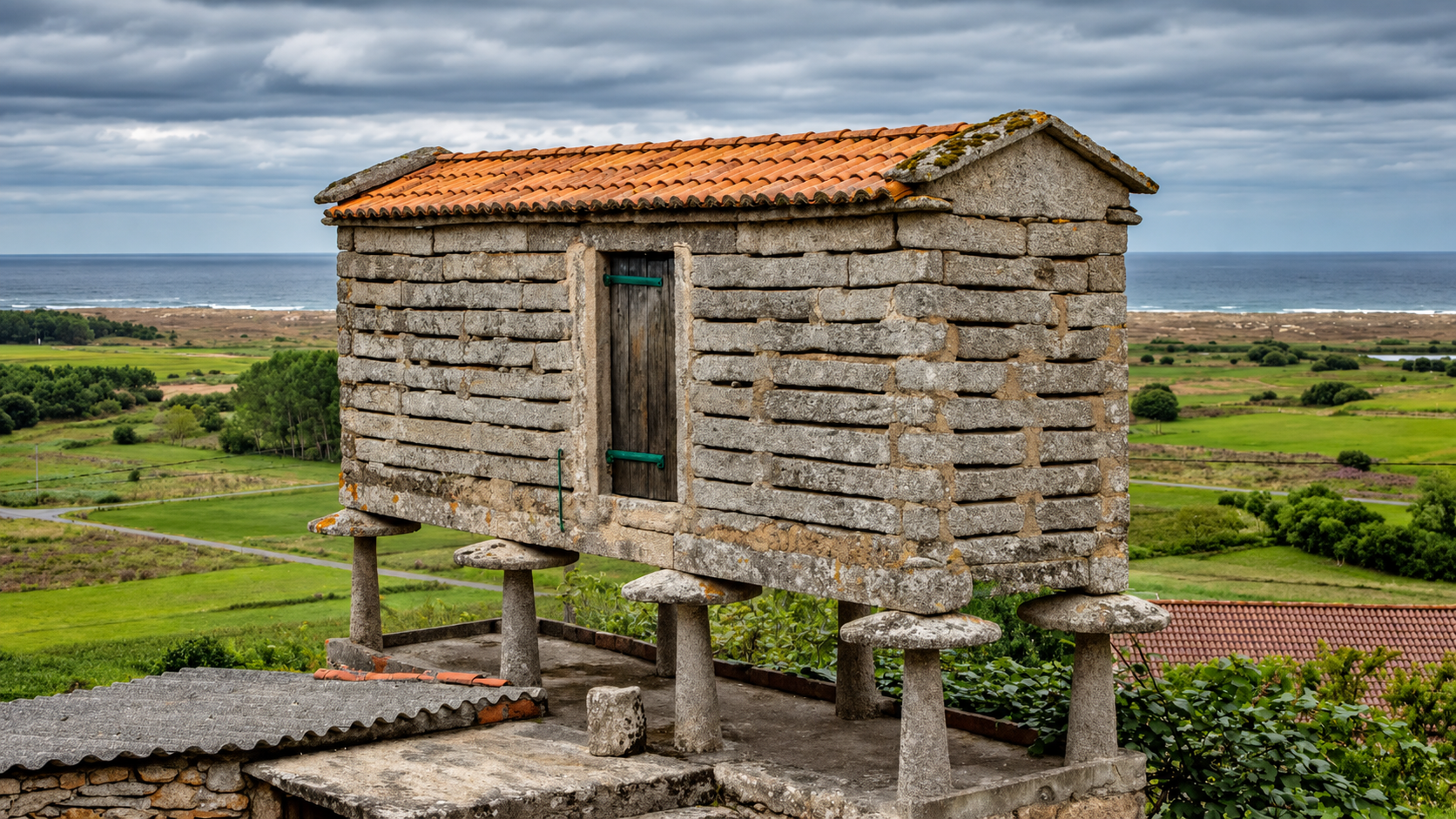
Stone — Poio, Galicia
CIFP de Cantería de Galicia
Escola de Cantería — información de la Diputación de Pontevedra
Stone remains a material to be learned from.
Located in Poio, Pontevedra, the CIFP de Cantería de Galicia continues the tradition of training stonemasons in one of the materials that most strongly defines the Galician landscape: granite.
The centre offers specialised training in stonemasonry, alongside other programmes related to construction and working with stone.
Students learn how to understand and select stone, cut it into blocks, shape individual pieces and understand how natural stone is assembled within a building. Throughout a programme that brings together precision, drawing and three-dimensional form, students develop a direct relationship with a material that responds differently to every strike.
In Galicia, where walls, churches and houses have been built in stone for centuries, teaching stonemasonry is not only a way of preserving tradition. It keeps alive the knowledge required to build, repair and understand a significant part of the region’s heritage.
A stone can last for centuries. The knowledge needed to work it may not.
Stained Glass — Chartres, Francia
Centre International du Vitrail
https://www.formations-vitrail.fr/fr/
Chartres has long been associated with the coloured light of stained glass.
Since 1995, the Centre International du Vitrail has been dedicated to passing on the craft. Its training programme covers both historical and contemporary techniques, as well as a professional pathway that includes the creation and installation of stained glass, glass painting and restoration.
The creative process begins by cutting the glass, before joining the individual pieces with lead cames. Students then learn how to alter the surface using grisaille, silver stain, enamels and techniques such as fusing.
Training as a stained-glass artist also means learning how to intervene in historic pieces: how to clean and stabilise them, document their condition and protect them.
It is this dual role — creating and conserving — that makes Chartres especially compelling.
The teaching is not focused solely on the great stained-glass windows of the past. It also prepares the craftspeople who will determine how this visual language continues into the future.
Written by

Subscribe to our newsletter
Subscribe to our newsletter to get the latest updates and news