Where Craft Survives II

For centuries, learning a craft meant entering a workshop. First, you watched. Then you worked. Skill was acquired through trial and error, until the tool became a natural extension of the hand.
In the first part of this journey, we explored places where it is still possible to learn how to make mosaics, work with wicker, weave textiles, carve stone or shape glass. But Europe’s map of traditional crafts extends far beyond these disciplines, into other forms of work that demand extraordinary precision.
From building a boat capable of navigating open water, to shaping wood into an object able to produce sound; from understanding a mechanism made up of tiny components that can measure time with remarkable accuracy, to working with paper and binding so that a book may survive for generations.
In Pasaia, Mirecourt, Glashütte and Ascona, there are schools where knowledge continues to pass from one generation to the next.
And the aim is not simply to teach how to make an object, but to understand why it is made in that particular way.
Boatbuilding — Pasaia, Basque Country
https://albaola.org/en/boatbuilding-school/
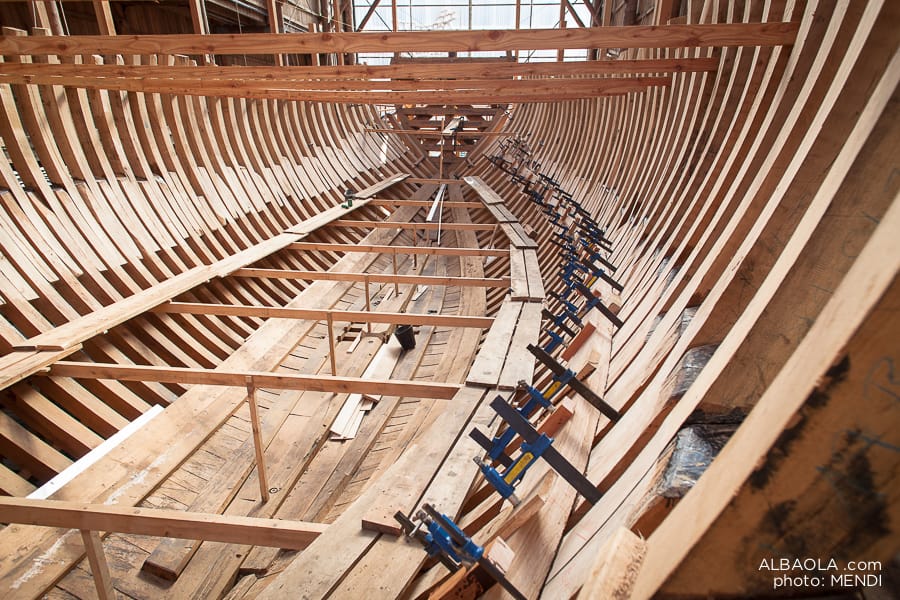
In Pasaia, knowledge is acquired by building real boats.
Aprendiztegi forms part of Albaola, the Basque Maritime Factory, a museum-shipyard dedicated to recovering maritime heritage and traditional wooden boatbuilding techniques.
Its approach to learning is rooted in practical experience. From the very beginning, students take part in naval carpentry, and throughout the three-year programme they work on different stages in the construction and restoration of historic vessels.
They learn techniques such as carvel and clinker planking, sawn and steam-bent frames, and increasingly complex structures. The school has just 18 students, with six new places offered each year.
There is something particularly direct about this form of learning. It leaves little room for abstraction.
Every frame, every joint and every structural decision will eventually have to face the water.
Some knowledge can only be learned by building something that has to float.
Violin Making — Mirecourt, France
École National Lutherie
https://enl-mirecourt.fr/en/ecole-nationale-de-lutherie-de-mirecourt/
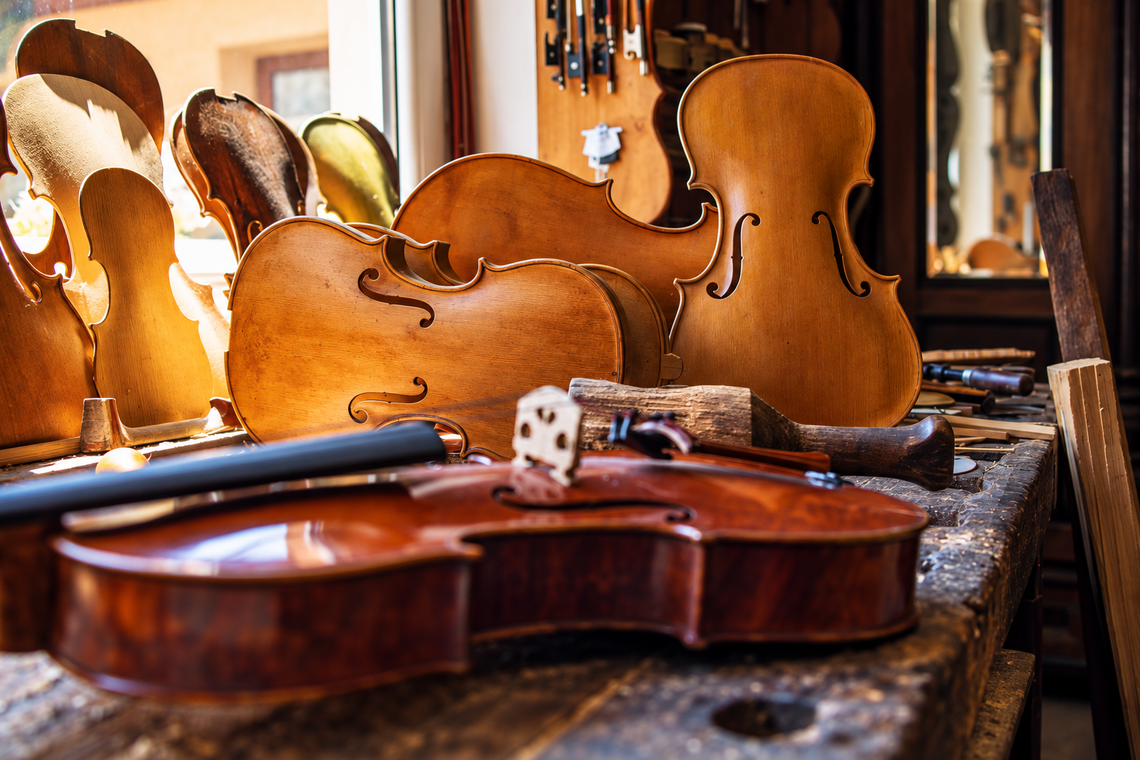
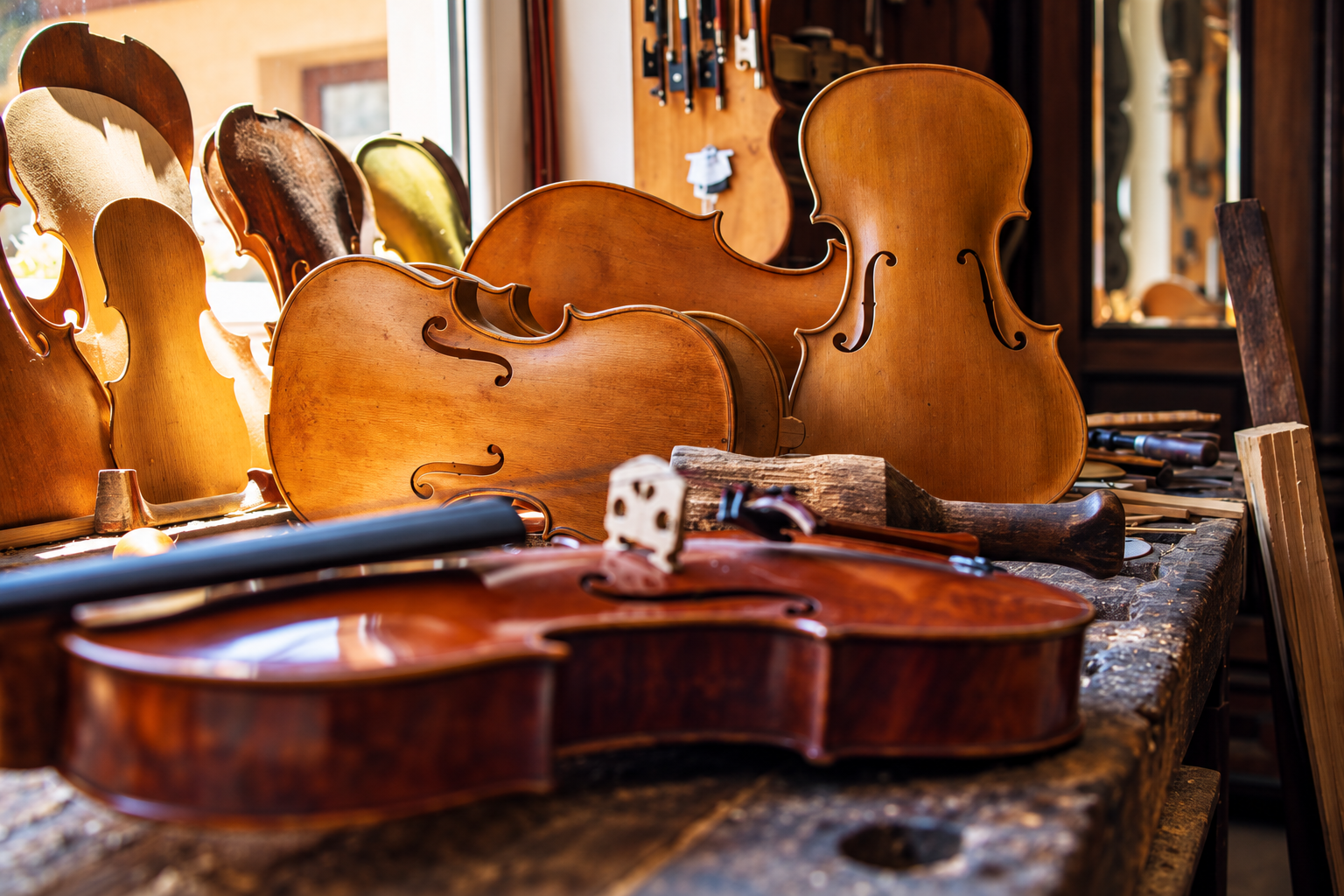
Mirecourt has been associated with French violin making for centuries. It is home to France’s only public school dedicated to the craft of making instruments of the string quartet.
The three-year programme takes place in the workshop. Students learn to make and restore violins, violas and cellos.
During their training, they become familiar with the tools, learn to work wood with precision and develop the sensitivity required to understand something that cannot simply be measured with a ruler: how an instrument responds when it begins to produce sound.
Musical practice also forms part of the student’s development. Knowing how to make the object is not enough. They must also understand what it is for — and for whom it is being made.
In Mirecourt, wood, geometry and acoustics eventually meet at the same point.
An instrument begins long before it produces its first note.
Watchmaking — Glashütte, Germany
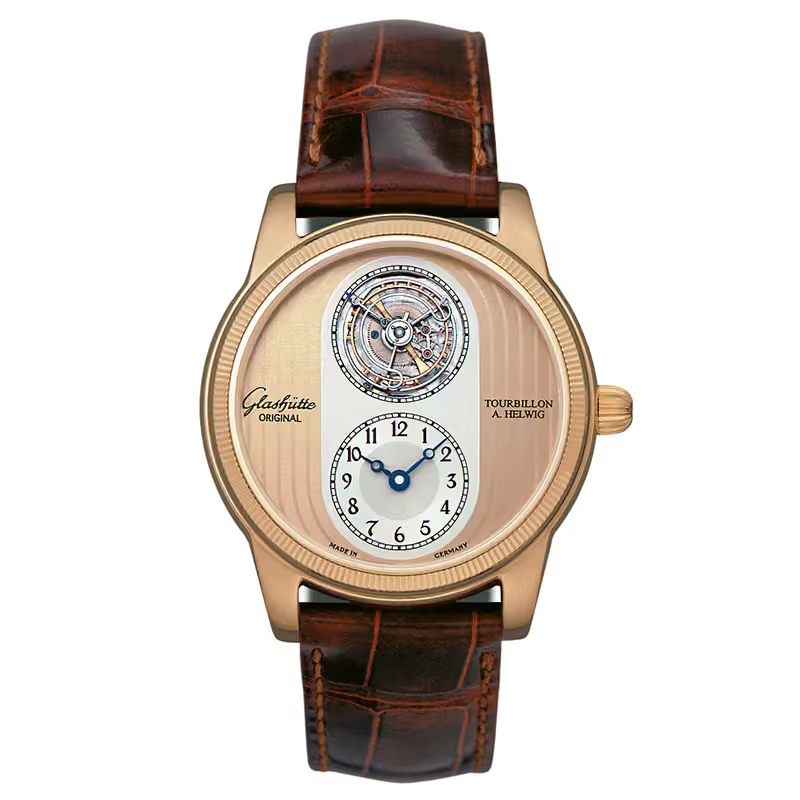
Alfred Helwig School of Watchmaking — Glashütte Original
https://www.glashuette-original.com/en/180-years-glashuette-watchmaking/
Watchmaking in Glashütte is more than an industry. It forms part of the identity of this small Saxon town, which has been associated with watchmaking since the mid-nineteenth century.
Glashütte Original has been training watchmakers in the same building since 1881. Since 2002, the school has borne the name of Alfred Helwig, a master watchmaker and teacher who, together with his students, took part in the development of the Flying Tourbillon in 1920, one of the most recognisable mechanisms in the town’s watchmaking tradition.
Students study the complex mechanics of a movement and develop the skill required to handle components so small that they demand an entirely different relationship with tools, time and their own hands.
Here, precision ceases to be an abstract idea. It becomes part of everyday work.
At a time when almost everything is measured digitally, Glashütte continues to teach something surprisingly analogue.
Precision is still measured by hand.
Bookbinding — Ascona, Switzerland
Centro del bel libro Ascona
https://www.cbl-ascona.ch/en/home
The story of the Centro del bel libro began in Ascona in 1965. Its aim was simple: to promote the knowledge and techniques needed to bring the well-made book closer to the public.
Three years later, it opened its advanced school of bookbinding.
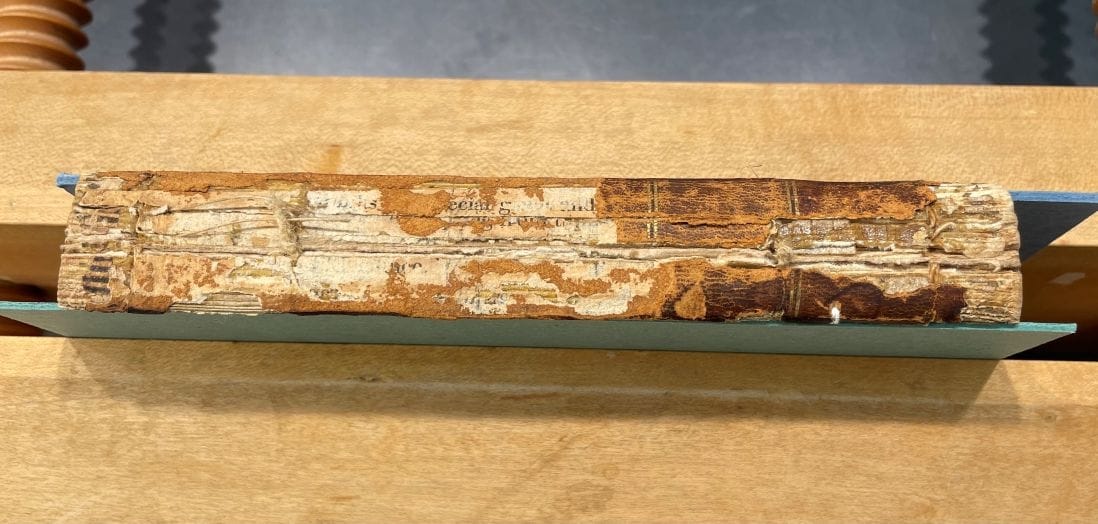
More than half a century later, the centre continues to work around the book as a physical object. Its courses bring together traditional bookbinding techniques with new structures, printing, design and conservation, working with spines, stitching, papers, adhesives, folds and systems that give a book stability without preventing it from opening and being used.
Today, when so much of our reading takes place on screens, it is easy to forget the physical dimension of a book.
A bound book has an architecture of its own. Every element has a function, and each one influences the life of the book itself.
The book is a small piece of architecture.
Further Reading
Mittenwald, Germany — Instrument Making
Musikinstrumentenbauschule - Home
LThe Bavarian tradition of instrument making continues at the Staatliche Berufsfachschule für Musikinstrumentenbau Mittenwald, where specialists are trained in string instrument making and other disciplines connected with musical craftsmanship.
Noceto / Parma, Italy — Violin Making
Scrollavezza Academy - International School of Violin Making
Born from the artistic legacy of Renato Scrollavezza, Accademia Scrollavezza is an international benchmark for excellence in violin making.
The Accademia Scrollavezza offers intensive training in violin making based on workshop practice, hand construction and a deep understanding of wood and acoustics.
What Remains
Schools of craftsmanship do not exist to turn the past into a museum.
Boats are being built in Pasaia. Instruments are being made in Mirecourt. In Glashütte, mechanisms continue to evolve, while in Ascona old techniques coexist with new ones in the design and making of books.
And that is where we find the difference between preserving a craft and keeping it alive.
The development of new techniques through research and accumulated experience allows a tradition to endure — to continue to be learned, used, questioned and passed on.
Tools change. So do materials, clients and perhaps even the purpose of what is being made.
But what is far more difficult to reconstruct once it has been lost is the knowledge accumulated over generations: that ability to recognise through the hands what no manual can ever fully explain.
That is what these schools preserve: a place where knowledge still has a direction.
Written by
Subscribe to our newsletter
Subscribe to our newsletter to get the latest updates and news